






What's Happening?
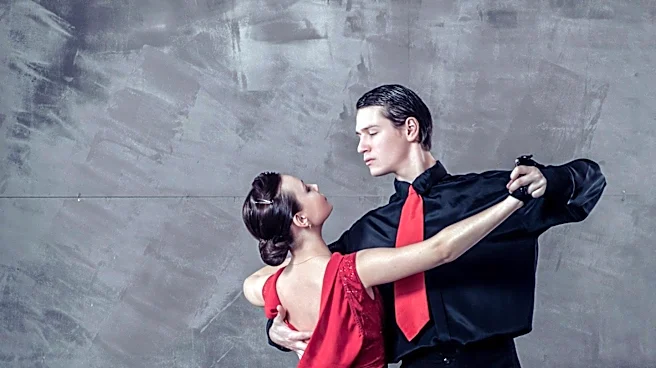
Researchers at the University of Colorado Boulder have discovered that experienced tango dancers can synchronize their brain activity while dancing together. The study, led by graduate student Thiago Roque, involved five pairs of tango dancers who wore
electroencephalogram (EEG) caps to measure brain activity and motion sensors to track their movements. The findings showed that as the dancers' movements became more synchronized, their brainwave patterns also aligned. This synchronization was observed across different types of brainwaves, including faster beta waves associated with concentration and slower theta waves linked to relaxed mental states. The study highlights the deep connection that can occur between individuals during shared activities like dancing.
Why It's Important?
The research provides insight into the phenomenon of interpersonal synchronization, which plays a crucial role in trust, teamwork, and social bonding. Understanding how brain synchronization occurs during activities like dancing could have broader implications for various fields. For instance, it could enhance training methods in sports by helping athletes better anticipate their teammates' movements. Additionally, the findings could influence rehabilitation programs and physical therapy by improving coordination and communication skills. The study underscores the potential of wearable technology to aid in training and therapy by providing feedback on synchronization levels.
What's Next?
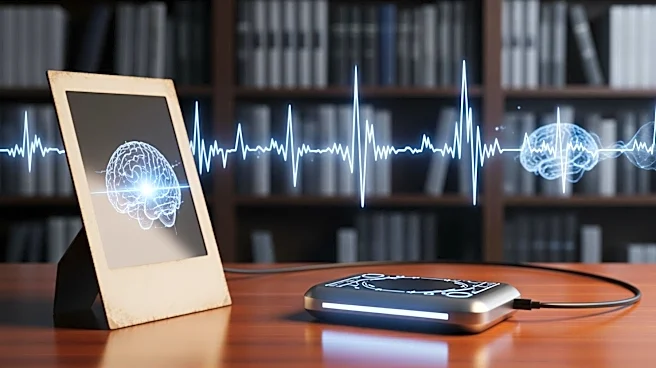
The researchers have developed a prototype wearable device that detects when dancers' brainwaves align, providing feedback through vibrations. Although the current version is experimental, future iterations could be refined to offer more natural feedback, potentially aiding in training and rehabilitation. The study's implications extend beyond dance, suggesting that similar synchronization could be beneficial in other collaborative activities. Further research could explore the application of these findings in sports, therapy, and social communication, potentially leading to new methods for enhancing interpersonal coordination and understanding.
Beyond the Headlines
The study touches on the broader concept of how humans unconsciously coordinate with each other in various activities. This silent communication is not limited to dance but is also present in sports, music, and other team-based activities. The research highlights the potential for technology to enhance our understanding of these interactions and improve our ability to work together effectively. As wearable technology advances, it could play a significant role in training and therapy, offering new ways to measure and improve synchronization and communication skills.