






What's Happening?
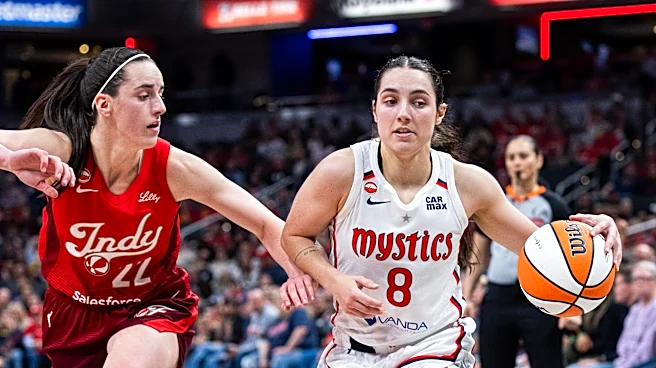
Caitlin Clark, a prominent player in the WNBA, has been the subject of criticism due to her high turnover rate. Despite her impressive scoring and passing abilities, Clark has led the league in turnovers per game in her first two seasons, averaging 5.6
and 5.1 turnovers per game, respectively. This season, she is averaging 5 turnovers per game, ranking third in the league. During a recent game between the Indiana Fever and the Seattle Storm, NBC broadcaster Kate Scott addressed the criticism, emphasizing that Clark's turnovers should be viewed in context. Scott compared Clark's assist-to-turnover ratio to NBA stars, noting that high turnover rates are common among players who handle the ball frequently. Scott highlighted that Clark's contributions in assists and scoring outweigh her turnovers, urging critics to consider the broader picture.
Why It's Important?
The discussion around Caitlin Clark's performance highlights the challenges faced by high-profile athletes in balancing public expectations with their on-court responsibilities. Clark's situation underscores the scrutiny athletes endure, particularly when they are key players in their teams. The defense by Kate Scott suggests a need for a nuanced understanding of player statistics, where turnovers are a natural consequence of a player's active role in the game. This perspective is crucial for fans and analysts to appreciate the complexities of basketball performance metrics. The broader implication is a call for more informed and balanced evaluations of athletes, which can influence public perception and media narratives.
What's Next?
As the season progresses, Caitlin Clark's performance will continue to be under the spotlight. It is likely that discussions around her turnovers and overall contributions will persist. Analysts and fans may begin to adopt a more comprehensive view of her statistics, considering both her strengths and areas for improvement. The ongoing dialogue could also prompt other analysts and commentators to provide similar context for other players facing criticism. This shift in narrative might influence how players are evaluated and appreciated in the future, potentially affecting contract negotiations and endorsements.