







What's Happening?
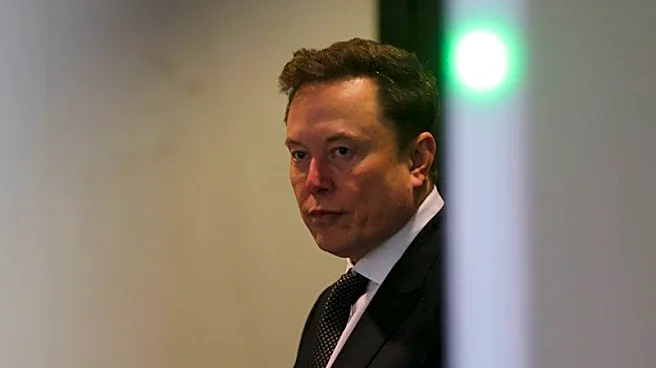
Elon Musk's influence over SpaceX has been further cemented following the company's recent IPO filing. The filing reveals that Musk will maintain his roles as CEO, CTO, and chairman of the board, holding more than 50% of the voting power. This control
allows him to appoint directors and make significant corporate decisions without needing shareholder approval. SpaceX's dual-class share structure grants Musk 93.6% of the Class B super-voting shares, ensuring his dominance. The company has also limited shareholders' ability to file legal challenges by incorporating in Texas, where more permissive regulations exist. This move follows Musk's previous relocation of Tesla's incorporation from Delaware to Texas.
Why It's Important?
Musk's control over SpaceX represents a significant shift in corporate governance norms, particularly for a company of its size and value. By maintaining such a high level of control, Musk can steer SpaceX's strategic direction without the typical checks and balances provided by shareholder influence. This could lead to innovative advancements, particularly in space exploration, but also raises concerns about accountability and oversight. The IPO is expected to be one of the largest in history, potentially making Musk the world's first trillionaire. However, the lack of traditional shareholder rights could deter some investors, impacting the broader market's perception of corporate governance standards.
What's Next?
As SpaceX prepares for its IPO, the company is expected to be rapidly included in the Nasdaq 100 index, which could drive up its stock price due to institutional buying. Musk's control means he can pursue ambitious projects, such as establishing a human colony on Mars, without needing to convince shareholders. This could lead to significant advancements in space technology and exploration. However, the concentration of power also means that any missteps or controversies could have amplified consequences for the company and its stakeholders.
Beyond the Headlines
The implications of Musk's control extend beyond SpaceX, potentially influencing how other tech companies approach governance. The use of dual-class shares and incorporation in states with favorable regulations could become more common, altering the landscape of corporate accountability. Additionally, Musk's ability to leverage his shares for personal financial gain without traditional tax implications highlights broader issues of wealth concentration and economic inequality.