
What's Happening?
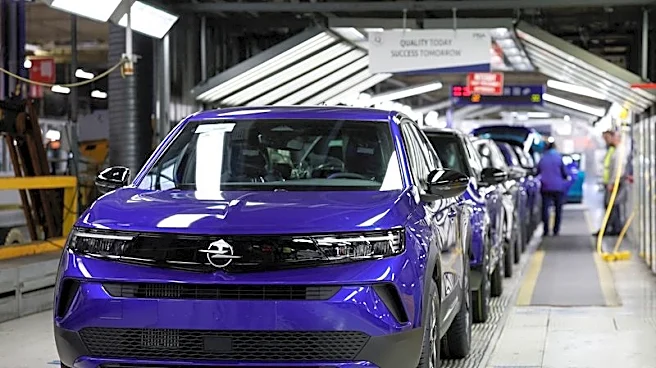
Stellantis has announced a strategic partnership with UK-based startup Wayve to integrate the Wayve AI Driver into its STLA AutoDrive platform. This collaboration aims to enable hands-free, door-to-door
supervised automated driving at Level 2++ across both highway and urban driving scenarios. The first production integration is planned for North America in 2028. This development follows Wayve's recent successful Series D funding round, which raised $1.2 billion with participation from strategic investors including Stellantis, Nissan, Microsoft, Nvidia, and Uber. Wayve CEO Alex Kendall highlighted the commercial scale opportunity with Stellantis, emphasizing the potential for global expansion.
Why It's Important?
The partnership between Stellantis and Wayve signifies a significant step forward in the automotive industry's shift towards autonomous driving technology. By integrating advanced AI systems into its vehicles, Stellantis is positioning itself to compete in the rapidly evolving market for automated driving solutions. This move could enhance Stellantis' competitiveness in North America, a key market for automotive innovation. The collaboration also reflects a broader industry trend where traditional automakers are increasingly partnering with tech startups to leverage cutting-edge technologies. This could lead to more efficient and safer driving experiences, potentially reducing traffic accidents and improving urban mobility.
What's Next?
The integration of Wayve's AI technology into Stellantis vehicles is set to begin in 2028, marking a significant milestone in the company's strategic roadmap. As the project progresses, it will be crucial to monitor how Stellantis navigates regulatory challenges and consumer acceptance of autonomous driving technologies. The success of this initiative could influence other automakers to pursue similar partnerships, accelerating the adoption of AI-driven vehicles. Additionally, stakeholders will be watching for further developments in Wayve's technology and its potential applications beyond the initial integration with Stellantis.