









What's Happening?
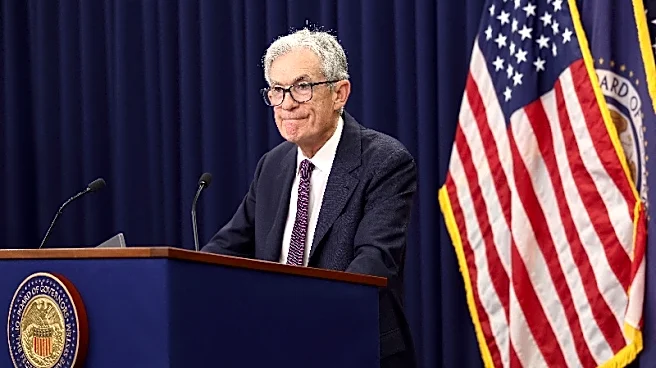
Federal Reserve Governor Stephen Miran has officially submitted his resignation, planning to vacate his position on the central bank board as Kevin Warsh assumes the role of Chair. Miran, who joined the Federal Reserve last September to complete an unexpired
term, has been a dissenting voice on the Federal Open Market Committee, consistently voting against rate decisions. His resignation comes as Warsh, confirmed by the Senate, prepares to lead the Fed with a focus on changing communication and balance sheet policies. Miran, who previously chaired the Council of Economic Advisers, expressed confidence in Warsh's leadership and the potential policy shifts under his tenure. Miran has been an advocate for lower interest rates and a forward-looking approach to monetary policy, emphasizing the need to consider nonmonetary factors like population growth and deregulation.
Why It's Important?
Miran's resignation and support for Warsh signal a potential shift in the Federal Reserve's approach to monetary policy. Warsh's leadership could bring changes in how the Fed communicates and manages its balance sheet, impacting financial markets and economic stakeholders. Miran's advocacy for lower rates and a forward-looking policy approach highlights ongoing debates within the Fed about how best to address economic challenges. The transition in leadership may influence the Fed's stance on interest rates, regulatory policies, and its broader role in economic governance. Stakeholders, including banks and investors, will closely watch these developments for their implications on financial stability and economic growth.
What's Next?
As Warsh takes over as Chair, the Federal Reserve may undergo significant policy changes, particularly in its communication strategies and balance sheet management. These changes could affect interest rate decisions and regulatory policies, influencing economic conditions and market dynamics. Stakeholders, including financial institutions and policymakers, will likely respond to these shifts, potentially leading to adjustments in investment strategies and economic forecasts. The Fed's approach to incorporating nonmonetary factors into policy decisions may also evolve, impacting how it addresses issues like employment and inflation.