


What's Happening?
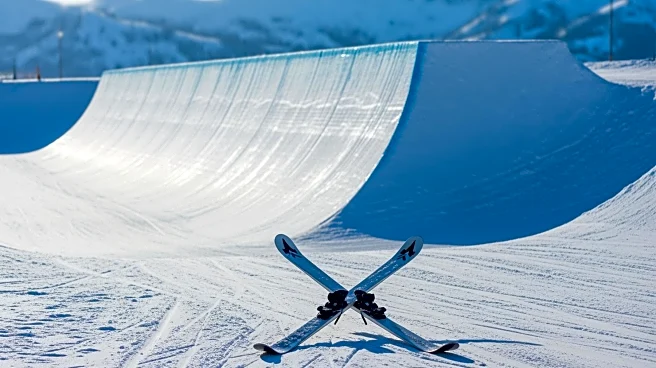
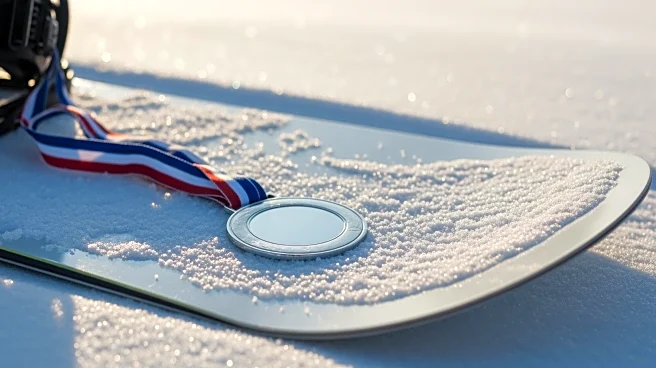
American snowboarder Chloe Kim recently reflected on her experience at the 2026 Milan Cortina Olympics, where she won a silver medal in the women's snowboard halfpipe event despite dealing with a significant shoulder injury. Kim sustained a labrum tear
in her left shoulder in January, which caused her shoulder to frequently dislocate. This injury required her to adjust her performance strategy, as she was unable to undergo surgery before the competition. Kim wore a shoulder brace that restricted her movement, forcing her to relearn and modify her tricks in a short period. Despite these challenges, Kim managed to score an 88.0 on her first run, maintaining the lead until the final run when Choi Gaon of the Republic of Korea surpassed her with a score of 90.25. Kim credited her support system, including her family, boyfriend Myles Garrett, and rapper Snoop Dogg, for helping her manage stress during the competition.
Why It's Important?
Chloe Kim's performance at the 2026 Olympics highlights the resilience and determination required by athletes to compete at the highest levels, even when faced with physical setbacks. Her ability to adapt her routine and still secure a podium finish underscores the importance of mental fortitude and support systems in sports. This event also brings attention to the physical demands and risks associated with competitive snowboarding, as well as the potential for injuries to impact athletes' careers. Kim's experience may inspire discussions on athlete health management and the need for adequate recovery time to prevent long-term damage.
What's Next?
Chloe Kim has not yet decided if she will compete in future Olympic events, as she plans to take a vacation before making any decisions about her career. Her immediate focus will likely be on recovering from her shoulder injury, which will require surgery and a six-week period in a sling. The snowboarding community and fans will be watching closely to see if Kim decides to return for another Olympic run in 2030. Her decision could influence the next generation of snowboarders and impact the sport's competitive landscape.