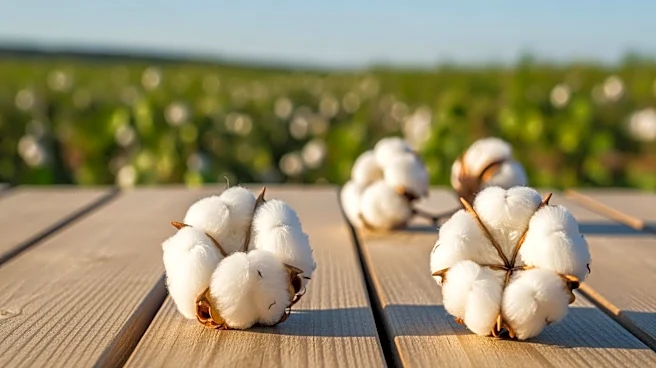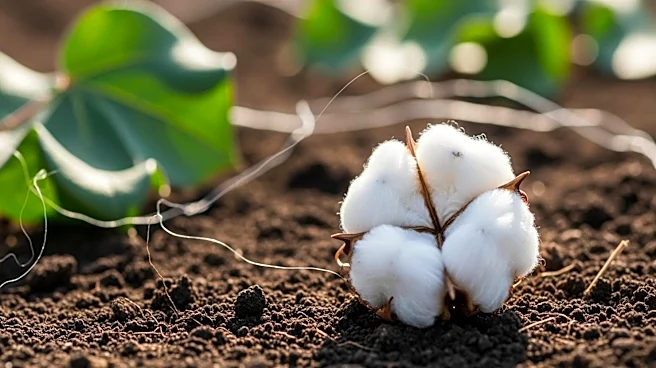

What's Happening?
The U.S. Department of Agriculture (USDA) has launched the Great American Cotton Plan, a comprehensive initiative aimed at revitalizing the cotton farm economy. Announced by U.S. Secretary of Agriculture Brooke
L. Rollins, the plan seeks to restore domestic textile manufacturing, expand cotton trade opportunities, and increase demand for American-grown cotton. The initiative responds to challenges faced by cotton producers, including rising costs, foreign competition, and the prevalence of synthetic materials. Key components of the plan include promoting the 'Plant Not Plastic' initiative, increasing marketing loan rates, and supporting domestic production through various USDA programs.
Why It's Important?
The Great American Cotton Plan addresses critical issues facing the U.S. cotton industry, which has seen declining profitability and increased competition from synthetic fibers. By promoting natural cotton over synthetic alternatives, the plan aligns with environmental and health concerns about microplastics. The initiative aims to strengthen rural economies by supporting cotton producers and related industries, potentially reversing the decline in domestic textile manufacturing. The plan's focus on increasing domestic demand and production could lead to economic benefits across the supply chain, from farmers to manufacturers.
What's Next?
The USDA's plan includes several measures to support the cotton industry, such as increased funding for biobased products and enhanced trade opportunities. The agency will work with Congress to support legislation like the Buying American Cotton Act, which could further boost domestic cotton use. Additionally, the USDA will continue to engage with international partners to expand export markets for U.S. cotton. As the plan is implemented, stakeholders in the cotton industry will likely monitor its impact on production, trade, and economic outcomes.
Beyond the Headlines
The emphasis on natural fibers like cotton highlights broader environmental and health considerations. As consumers become more aware of the impacts of synthetic materials, the demand for sustainable alternatives may grow. The plan's success could influence other agricultural sectors to adopt similar strategies, promoting sustainability and reducing reliance on synthetic products. Additionally, the initiative may spark discussions on the role of government in supporting traditional industries facing modern challenges.