





What's Happening?
Ken Griffin, CEO of Citadel Advisors LLC, has issued a stark warning about the global economic outlook if the Strait of Hormuz remains closed. Speaking at the Semafor World Economy Summit in Washington, D.C., Griffin stated that a prolonged closure of the strait
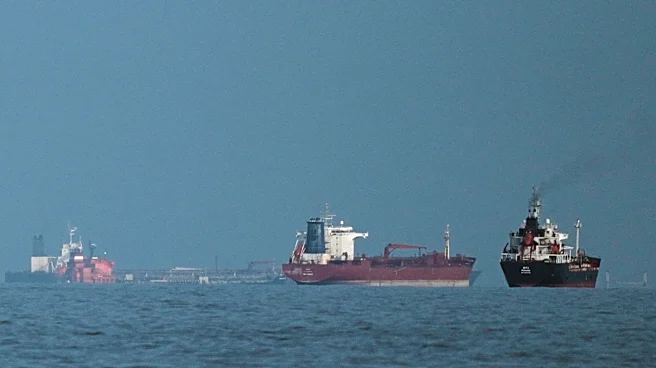
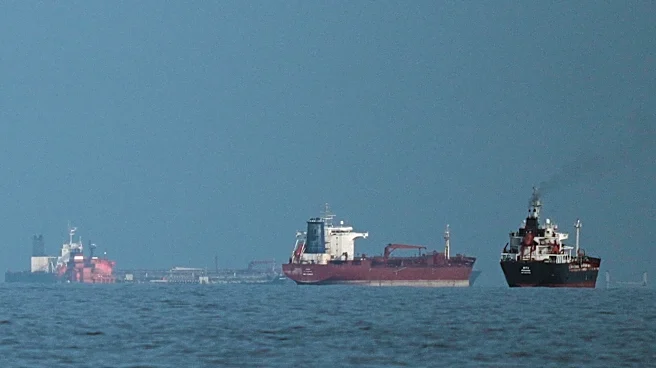
could lead to a global recession. The Strait of Hormuz is a critical chokepoint for global oil shipments, and its closure has already led to elevated oil prices, currently around $100 a barrel. Griffin emphasized that the world would likely see a significant shift towards alternative energy sources such as wind, solar, and nuclear power if the strait remains shut. The ongoing conflict in the Middle East, particularly involving the U.S. and Iran, has heightened concerns about energy security and economic stability.
Why It's Important?
The potential closure of the Strait of Hormuz poses a significant threat to global economic stability, particularly for countries heavily reliant on oil imports. A recession triggered by such an event could have widespread implications, affecting industries, employment, and economic growth worldwide. The shift towards alternative energy sources could accelerate, impacting traditional energy markets and potentially leading to increased investment in renewable energy technologies. The situation underscores the vulnerability of global supply chains to geopolitical tensions and the need for diversified energy strategies.
What's Next?
If the Strait of Hormuz remains closed, countries may need to expedite their transition to alternative energy sources to mitigate the impact of reduced oil supplies. Governments and businesses might increase investments in renewable energy infrastructure and technologies. Additionally, diplomatic efforts could intensify to resolve the conflict and reopen the strait, aiming to stabilize global oil markets and prevent a recession. The situation will likely remain a focal point for international economic and political discussions.