







What's Happening?
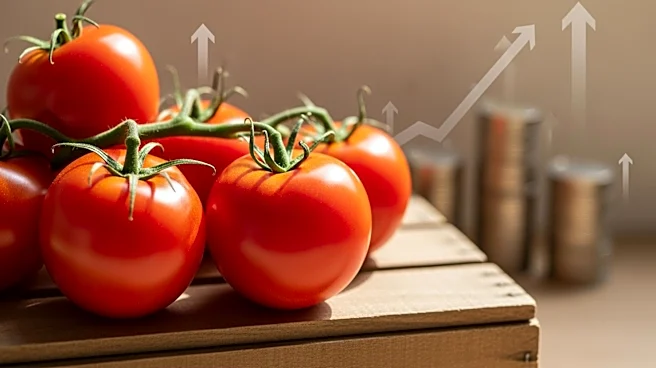
Food inflation in the United States is projected to rise significantly, potentially reaching as high as 6% in the latter half of 2026 through 2027. This increase is primarily driven by soaring fuel prices, which are exacerbated by geopolitical tensions,
according to a report by Rabobank North America. The report highlights that elevated energy prices are causing a ripple effect throughout the food system, from fertilizer production to transportation and packaging. This inflationary pressure is expected to affect various sectors, including grains, oilseeds, meat, and dairy production. The report also notes that the current inflationary cycle is distinct from the post-pandemic surge, as it is more likely to constrain pricing power and impact the margins of food and beverage companies.
Why It's Important?
The anticipated rise in food inflation poses significant challenges for both consumers and producers in the United States. For consumers, particularly those in lower- and middle-income brackets, the increased costs could lead to a shift in purchasing behavior, such as trading down to cheaper brands or seeking more promotions. This could result in a more bifurcated consumption trend, where higher-income consumers maintain their spending levels while others adjust their buying habits. For producers, the rising input costs could squeeze profit margins, especially in labor- and logistics-intensive categories. The situation underscores the broader economic impact of geopolitical tensions and energy market dynamics on the U.S. food system.
What's Next?
As the inflationary pressures continue, food and beverage companies may need to adjust their strategies to cope with the rising costs. This could involve altering product mixes, seeking cost efficiencies, or passing some of the costs onto consumers. Additionally, the response from consumers will be crucial in determining the overall impact on the market. If demand softens significantly, it could lead to further adjustments in pricing and product offerings. Policymakers and industry stakeholders will likely monitor these developments closely to mitigate the adverse effects on the economy and ensure food security.
Beyond the Headlines
The rising food inflation highlights the interconnectedness of global geopolitical events and domestic economic conditions. The closure of strategic trade routes, such as the Strait of Hormuz, can have far-reaching implications for energy prices and, consequently, food production costs. This situation also raises questions about the resilience of the U.S. food supply chain and the need for strategies to manage such external shocks. Furthermore, the potential for a K-shaped economic recovery, where different segments of the population experience varying levels of financial strain, could exacerbate social and economic inequalities.