
What's Happening?
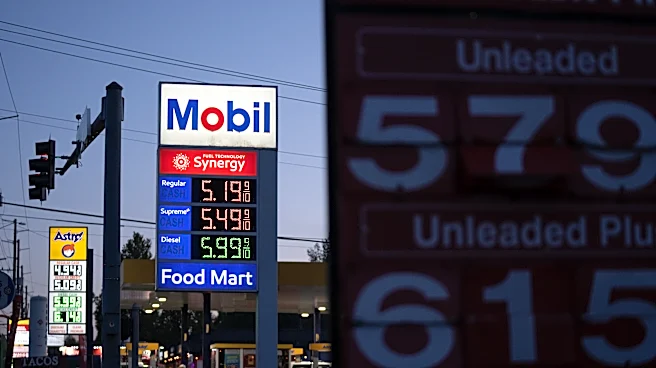
A key inflation measure in the United States rose significantly in March, driven by soaring gas prices, as reported by the Commerce Department. The inflation gauge, closely watched by the Federal Reserve,
increased by 0.7% from February, marking the largest rise in nearly three years. This surge is attributed to the ongoing conflict in Iran, which has disrupted oil supplies and contributed to higher energy costs. Core inflation, excluding food and energy, also saw a rise of 0.3% from the previous month. Concurrently, the average long-term mortgage rate in the U.S. increased to 6.3%, ending a three-week decline. Despite these economic pressures, U.S. consumer confidence showed a slight improvement in April, although it remains low compared to pre-pandemic levels.
Why It's Important?
The rise in inflation and gas prices has significant implications for the U.S. economy and consumers. Higher inflation can erode purchasing power, making everyday goods and services more expensive for Americans. The increase in mortgage rates could also impact the housing market, potentially slowing down home purchases as borrowing costs rise. The Federal Reserve may face challenges in balancing interest rate policies to manage inflation without stifling economic growth. Additionally, the ongoing conflict in Iran adds uncertainty to global oil markets, which could lead to further volatility in energy prices. These economic conditions could influence consumer behavior, business investments, and overall economic stability in the U.S.
What's Next?
The Federal Reserve will likely continue to monitor inflation trends closely, considering potential adjustments to interest rates to curb rising prices. Economic stakeholders, including businesses and consumers, may need to brace for continued volatility in energy prices and its ripple effects on the broader economy. Policymakers might explore strategies to mitigate the impact of external geopolitical events on domestic economic conditions. The trajectory of the Iran conflict will be crucial in determining future oil supply stability and its influence on global markets.