
What's Happening?
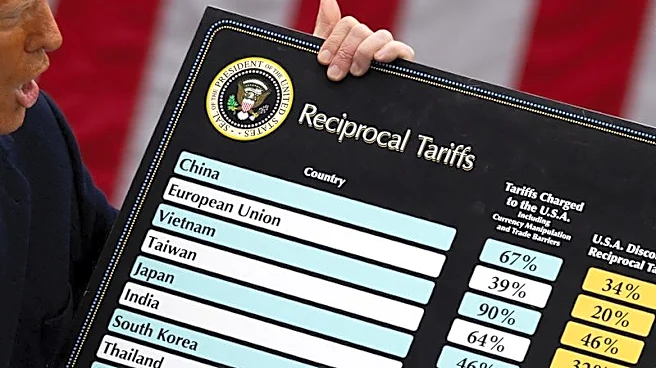
A federal court in New York has ruled against President Trump's imposition of a 10 percent global tariff under Section 122 of a 1974 trade law. The U.S. Court of International Trade found that the tariffs,
justified by Trump on the basis of the nation's trade deficit, were unlawful. The court's decision comes as a significant setback to Trump's economic strategy, particularly as he prepares for trade discussions with Chinese leader Xi Jinping. The ruling was a 2-1 decision by a three-judge panel, which granted summary judgment in favor of plaintiffs including Burlap & Barrel and Basic Fun, while dismissing claims from other states that had not paid the tariffs. This marks the second major legal defeat for Trump's tariff policies, following a Supreme Court decision that invalidated earlier emergency import taxes.
Why It's Important?
The court's decision challenges the Trump administration's approach to using older trade laws to impose tariffs, raising questions about the balance of power between the executive branch and Congress regarding trade policy. The ruling could influence future trade negotiations and the administration's ability to unilaterally impose tariffs. While the decision directly impacts the plaintiffs, it leaves uncertainty for other businesses still subject to the tariffs. The administration's plan to replace the Section 122 tariffs with other import taxes suggests ongoing legal and economic battles. The outcome of these disputes could affect U.S. trade relations and economic policy, particularly with major trading partners like China.
What's Next?
The Trump administration is expected to appeal the court's decision, as it has done with previous rulings against its tariff policies. The Section 122 tariffs were set to expire in July, and the administration plans to implement new import taxes under different legal authorities. This ongoing legal process may lead to further lawsuits from businesses seeking relief from the tariffs. The administration's strategy will likely involve completing necessary investigations to impose tariffs under Sections 301 and 232 of U.S. trade law. The outcome of these efforts will be crucial in shaping the future of U.S. trade policy and its economic impact.