
What's Happening?
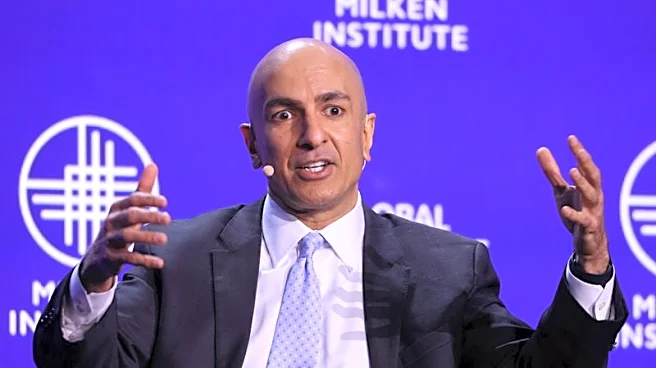
Mohamed El-Erian, a prominent economist and former co-CIO at PIMCO, has expressed concerns about the future of U.S. markets and the economy. He highlights the challenges facing the concept of American
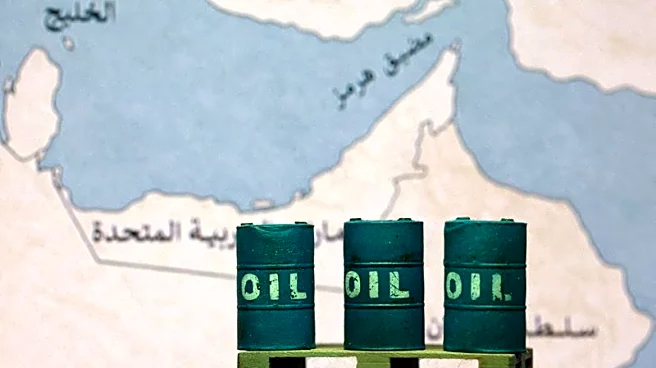
exceptionalism, which suggests that U.S. markets and the economy will consistently outperform global counterparts. El-Erian attributes these challenges to vulnerabilities that have developed during a period of ultra-low interest rates and abundant liquidity. He notes that investors have become accustomed to buying market dips, which has driven stock prices to record highs. Despite ongoing geopolitical tensions, such as the Iran war, the S&P 500 has reached unprecedented levels. El-Erian questions whether current market valuations can be sustained, given the significant 'baggage' from past fiscal and monetary policies. He advises investors to reconsider their risk-taking strategies as the era of cheap money has ended, and inflation concerns resurface due to rising oil prices.
Why It's Important?
El-Erian's insights are significant as they challenge the prevailing belief in the U.S.'s economic superiority. His warning about the potential limits of U.S. economic outperformance could have broad implications for investors and policymakers. If U.S. markets begin to lag, it could affect global investment strategies and economic policies. The end of the era of cheap money and the return of inflationary pressures could lead to tighter monetary policies, impacting economic growth and market stability. Investors may need to adjust their portfolios to mitigate risks associated with these changes. Additionally, the geopolitical situation, particularly the Iran war, adds another layer of complexity, potentially affecting global oil prices and economic stability.
What's Next?
As the U.S. navigates these economic challenges, investors and policymakers will need to closely monitor market conditions and geopolitical developments. The Federal Reserve's response to inflation and economic growth will be critical in shaping future market dynamics. Investors may need to adopt more conservative strategies, focusing on relative positioning rather than absolute risk-taking. The ongoing Iran war and its impact on oil prices will also be a key factor to watch, as it could exacerbate inflationary pressures and influence global economic trends.