
What's Happening?
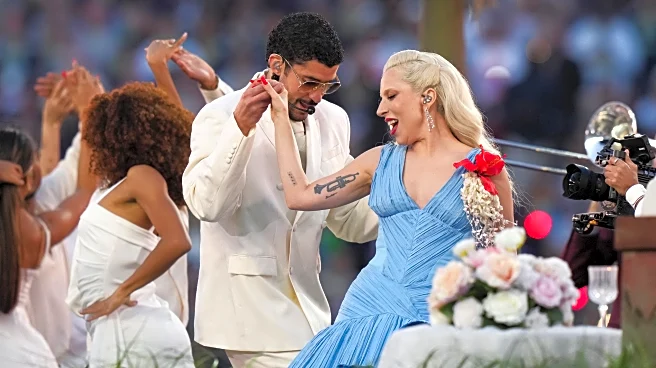
Villa's Tacos, a popular Los Angeles taqueria, made a notable appearance during the Super Bowl halftime show featuring Puerto Rican artist Bad Bunny. The restaurant, known for its blue corn tortillas and
char-grilled meats, was highlighted as part of the performance. Victor Villa, the owner, was featured in a scene where Bad Bunny interacted with various small businesses. Villa's Tacos, which began as a pop-up in Highland Park in 2018, has gained recognition for its innovative approach to traditional Mexican cuisine. The restaurant has been listed in the L.A. Times 101 Best Restaurants and is included in the Michelin guide. Villa expressed gratitude for the opportunity, attributing his success to his family's immigrant background and the journey from selling tacos in his grandmother's front yard to being part of a major cultural event.
Why It's Important?
The inclusion of Villa's Tacos in the Super Bowl halftime show underscores the growing recognition and celebration of diverse cultural contributions in mainstream American events. This exposure not only highlights the success of immigrant entrepreneurs but also reflects the increasing appreciation for diverse culinary traditions. For Villa's Tacos, this appearance could lead to increased visibility and business opportunities, further cementing its status in the competitive Los Angeles food scene. The event also illustrates the broader trend of integrating multicultural elements into high-profile entertainment platforms, potentially influencing public perceptions and fostering greater inclusivity.
What's Next?
Following the Super Bowl appearance, Villa's Tacos may experience a surge in popularity, attracting new customers and media attention. This could lead to expansion opportunities or collaborations with other brands and artists. The restaurant's involvement in such a significant event may also inspire other small businesses and entrepreneurs from diverse backgrounds to pursue similar opportunities. Additionally, the positive reception of multicultural elements in mainstream events could encourage organizers to continue incorporating diverse voices and stories in future productions.