
What's Happening?
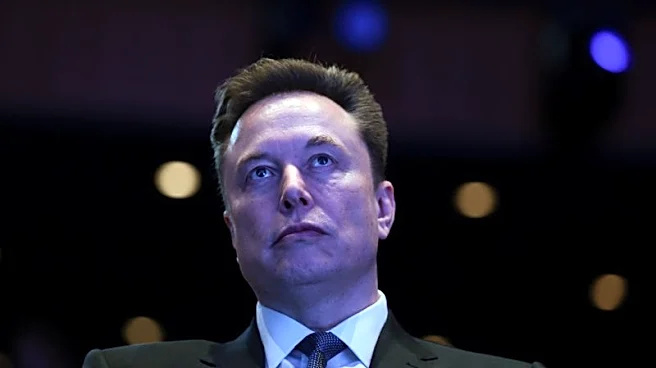
Elon Musk has proposed that a universal high income funded by the government could mitigate job losses due to AI advancements without causing inflation. Musk argues that AI and robotics will enhance production
efficiency, offsetting any inflationary effects of increased money supply. However, economist Steve Hanke challenges this view, citing historical instances where productivity booms did not prevent inflation. Hanke emphasizes that while Musk's theory is plausible, it does not guarantee that inflation will be avoided, highlighting the complexity of economic dynamics.
Why It's Important?
The debate between Musk and Hanke underscores the broader economic implications of AI and automation on employment and income distribution. Musk's proposal for a universal income reflects growing concerns about job displacement and economic inequality in an AI-driven future. Hanke's cautionary stance highlights the uncertainties and potential risks associated with such economic policies. This discussion is critical for policymakers and economists as they consider strategies to address the socioeconomic challenges posed by technological advancements, balancing innovation with economic stability.