
What's Happening?
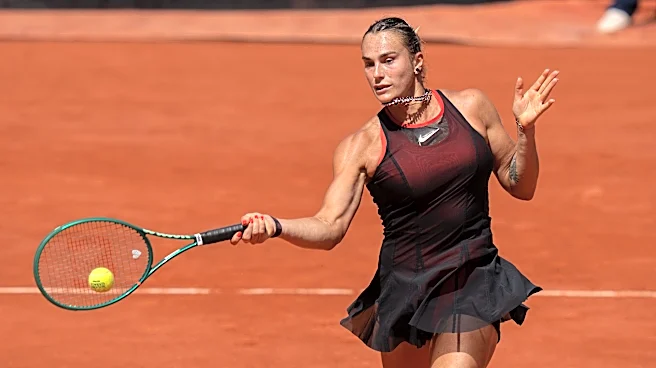
The French Open is set to feature a women's match in its night session for the first time in three years. Aryna Sabalenka, the current world No. 1, will face former No. 1 Naomi Osaka in a fourth-round
match on Monday. This decision marks a significant shift from the tournament's previous practice of reserving prime-time slots almost exclusively for men's singles contests. Since the introduction of the night session in 2021, only four of the first 60 matches have been women's singles, with none since 2023. The change comes amid criticism from players and officials, including Jessica Pegula and Ons Jabeur, who have called for greater representation of women's matches. The match between Sabalenka and Osaka will end a streak of 33 consecutive men's matches in the evening session.
Why It's Important?
The inclusion of a women's match in the night session at the French Open is a significant step towards gender equality in sports scheduling. Historically, women's matches have been underrepresented in prime-time slots, which has contributed to lower visibility and viewership compared to men's matches. By featuring high-profile players like Sabalenka and Osaka, the tournament is addressing criticisms and promoting women's tennis. This move could influence other major tournaments to reconsider their scheduling practices, potentially leading to increased exposure and support for women's sports. The decision also reflects broader societal shifts towards gender equality and the recognition of women's contributions to sports.
What's Next?
The outcome of the Sabalenka-Osaka match could set a precedent for future scheduling decisions at the French Open and other major tournaments. If the match attracts significant viewership and positive feedback, it may encourage organizers to continue featuring women's matches in prime-time slots. Additionally, ongoing discussions between tournament officials and representatives from the Women's Tennis Association (WTA) could lead to more equitable scheduling practices. Players and advocates for women's sports will likely continue to push for increased representation and visibility, aiming to ensure that women's matches receive the same opportunities as men's matches.
Beyond the Headlines
The decision to feature a women's match in the night session highlights the ongoing struggle for gender equality in sports. Despite progress, women athletes often face challenges in gaining equal recognition and opportunities. This development at the French Open could inspire broader changes across various sports, encouraging organizations to prioritize gender equality in their policies and practices. It also underscores the importance of media representation in shaping public perceptions and interest in women's sports. As more women's matches are showcased in prime-time slots, it could lead to increased sponsorship opportunities and financial support for female athletes.