







What's Happening?
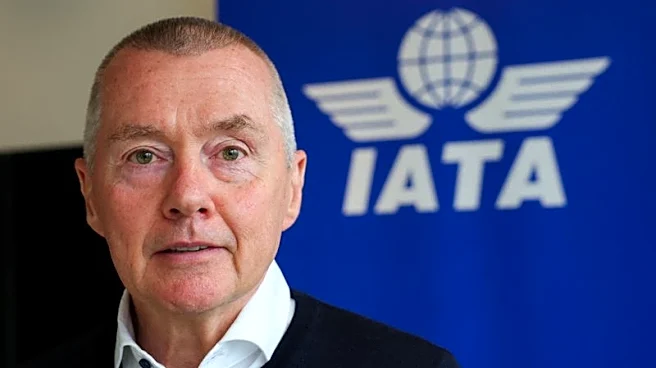
The International Air Transport Association (IATA) has expressed concerns about travel demand trends following the summer season, as discussed by Regional Vice President Rafael Schvartzman at the IATA annual general meeting in Rio de Janeiro. Despite
a forecast for a strong summer travel season in Europe, April showed minimal growth, and there is uncertainty about demand levels post-summer due to economic factors and higher travel costs. Demand for travel to Spain and Portugal remains strong, but airlines have had to adjust capacity due to geopolitical issues, such as the Iran war and airspace closures. Schvartzman assured that there is no expected jet fuel shortage in Europe for the summer, although he noted potential operational challenges due to the European entry and exit system's flawed introduction, causing significant delays for non-European travelers.
Why It's Important?
The IATA's assessment is crucial for the aviation industry, as it highlights potential challenges in maintaining travel demand amidst economic uncertainties and geopolitical tensions. The assurance of sufficient fuel supply is vital for airlines planning their operations during the peak travel season. However, the operational difficulties posed by the new entry and exit system could impact passenger satisfaction and airport efficiency, potentially affecting the overall travel experience. Airlines and airports may need to implement strategies to manage these challenges effectively, ensuring smooth operations and maintaining customer trust.
What's Next?
Airlines and airports may need to prepare for potential operational disruptions due to the entry and exit system issues, possibly extending the partial suspension beyond September 7 if necessary. The industry will also need to monitor economic conditions and adjust pricing strategies to maintain demand. Stakeholders may advocate for more flexible implementation of the new system to minimize passenger inconvenience. Additionally, airlines might continue to adjust their capacity and routes in response to geopolitical developments and fuel price fluctuations.