





What's Happening?
Robotic vision systems, crucial for the deployment of robots in real-world environments, continue to face significant challenges. Despite advancements in technology, robots often struggle to perform outside controlled conditions due to issues with depth
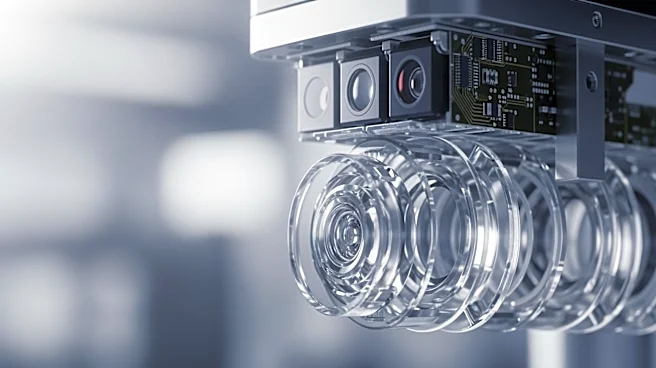
sensing. Traditional 2D cameras, while useful for recognition and tracking, do not measure depth, leading to reliance on technologies like structured light, stereo vision, and time-of-flight (ToF) cameras. Each of these technologies has its limitations, such as sensitivity to ambient light, motion, and reflective surfaces. The gap between demo performance and real-world deployment remains a persistent issue, as robots need reliable spatial measurements to function effectively in dynamic environments like warehouses and hospitals.
Why It's Important?
The challenges in robotic vision have significant implications for industries relying on automation, such as manufacturing, logistics, and healthcare. Reliable robotic perception is essential for tasks that require precision and safety, especially in environments with human interaction. The inability to accurately perceive depth can lead to operational failures, increased costs, and safety hazards. As industries push for more automation, the demand for robust and adaptable robotic vision systems grows. Companies investing in robotics must address these perception challenges to ensure successful deployment and integration into existing workflows, ultimately impacting productivity and efficiency.
What's Next?
Future advancements in robotic perception are expected to focus on improving depth sensing technologies and sensor fusion. Enhancements in stereo systems, ToF cameras, and structured light will be crucial. Additionally, the development of perception systems that can recognize and adapt to uncertainty will be vital. These systems need to provide reliable spatial information under varying conditions, including challenging lighting and material scenarios. As the robotics industry continues to innovate, the goal will be to make real-world deployment as seamless as controlled demos, ensuring robots can operate effectively in diverse environments.
Beyond the Headlines
The ongoing development in robotic vision highlights the broader trend of integrating artificial intelligence with physical systems. As AI continues to evolve, its role in enhancing robotic perception will grow, but it cannot replace the need for accurate physical data. The ethical and safety considerations of deploying robots in human-centric environments also underscore the importance of reliable perception systems. Ensuring that robots can safely and effectively interact with their surroundings is crucial for gaining public trust and acceptance of automation technologies.