
What's Happening?
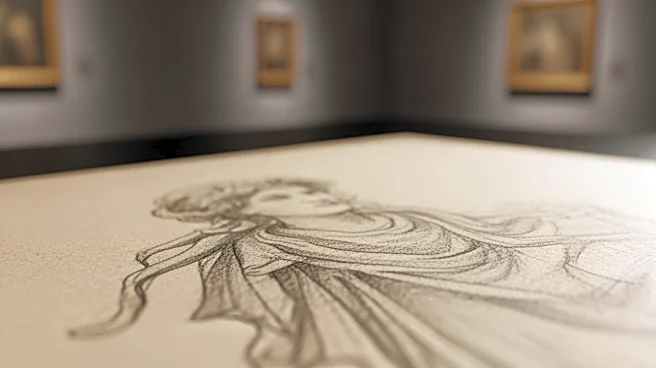
A newly discovered Michelangelo drawing, a study for the right foot of the Libyan Sibyl, is on display at Christie's New York ahead of its auction. This drawing, dating back to 1511-12, is one of only
about 10 Michelangelo drawings in private hands and is expected to sell for $1.5 million to $2 million. The drawing was identified by Giada Damen from Christie's Old Masters Drawings Department after being submitted for valuation by a man who inherited it from his grandmother. The drawing, executed in red chalk, is noted for its meticulous anatomical detail and is linked to Michelangelo's work on the Sistine Chapel ceiling.
Why It's Important?
The discovery of this Michelangelo drawing is significant for both the art world and collectors. It represents a rare opportunity to own a piece of art history connected to the iconic Sistine Chapel. The drawing's auction could set a precedent for the valuation of similar works, impacting the market for Old Master drawings. Additionally, the public exhibition of the drawing allows art enthusiasts and scholars to engage with a piece of Renaissance history, potentially inspiring further research and interest in Michelangelo's work.
What's Next?
The drawing will be auctioned at Christie's New York on February 5, following its display in London and Dubai. The auction is expected to attract significant attention from collectors and institutions, potentially leading to competitive bidding. The outcome of the auction could influence future sales of similar artworks and impact the market for Renaissance art. Christie's expertise in handling such a significant piece may also enhance its reputation in the art world.
Beyond the Headlines
This discovery highlights the enduring legacy of Michelangelo and the continued relevance of Renaissance art in contemporary culture. It also underscores the importance of provenance and expert evaluation in the art market, as the drawing's history and authentication were crucial in establishing its value. The story of the drawing's discovery and its journey from private ownership to public auction adds a narrative layer that enriches its historical and cultural significance.