






What's Happening?
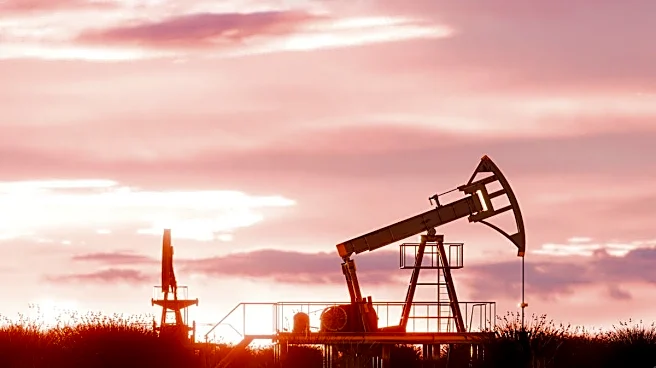
Gold prices have fallen as renewed tensions between the U.S. and Iran have led to a rise in Brent crude oil prices, increasing inflation concerns and affecting the outlook for U.S. interest rates. The U.S. military's actions in Iran have dampened hopes
for a quick resolution to the Middle East conflict, causing uncertainty in the markets. Spot gold decreased by 0.7%, while other precious metals like silver, platinum, and palladium also saw declines. The elevated oil prices are expected to accelerate inflation, potentially leading to higher interest rates, which typically weigh on non-yielding assets like gold.
Why It's Important?
The decline in gold prices amidst geopolitical tensions highlights the interconnectedness of global events and financial markets. The rise in oil prices due to U.S.-Iran tensions could lead to increased inflation, influencing the Federal Reserve's monetary policy decisions. Higher interest rates could further pressure gold prices, as investors may seek higher-yielding assets. This situation underscores the importance of geopolitical stability in maintaining economic balance and the potential impact of international conflicts on domestic financial markets.
What's Next?
Investors will be closely watching the U.S.-Iran negotiations and upcoming U.S. Personal Consumption Expenditures (PCE) data for further insights into inflation trends and monetary policy directions. The Federal Reserve's response to inflationary pressures will be critical in shaping future market dynamics. Additionally, the ongoing geopolitical tensions may continue to influence commodity prices and investor sentiment, necessitating careful monitoring by market participants.