






What's Happening?
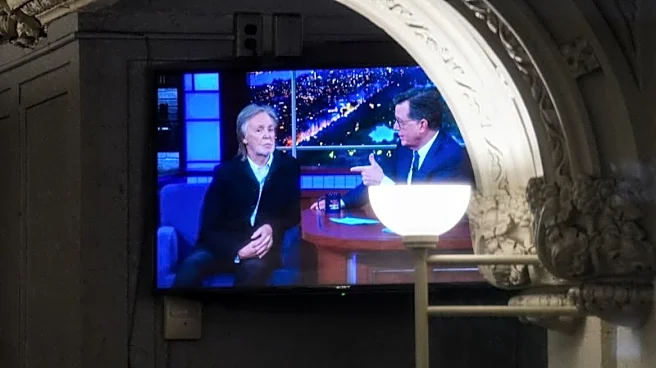
The Late Show with Stephen Colbert aired its final episode, marking the end of an 11-year run at the Ed Sullivan Theater. The episode featured a mix of celebratory elements, including celebrity cameos, musical performances, and a unique sci-fi twist.
Music legend Paul McCartney was the surprise final guest, reminiscing about The Beatles' first U.S. appearance at the same theater in 1964. The show concluded with a fictional interdimensional wormhole consuming the theater, Colbert, and the audience, symbolizing the show's end. The episode included performances by Colbert, Louis Cato, Jon Batiste, Elvis Costello, and McCartney, culminating in a sing-along of The Beatles' 'Hello Goodbye.'
Why It's Important?
The conclusion of The Late Show with Stephen Colbert marks a significant shift in the late-night television landscape. Colbert's show has been a staple of political satire and cultural commentary, influencing public discourse and providing a platform for diverse voices. Its end may impact CBS's programming strategy and the competitive dynamics among remaining late-night shows. The finale's unique blend of humor, nostalgia, and creativity reflects Colbert's influence on the genre, setting a high bar for future hosts. The show's departure leaves a gap in late-night television, potentially affecting viewership patterns and advertising strategies.
What's Next?
With The Late Show's conclusion, CBS will need to decide on a successor or a new format to fill the time slot. The network may explore different genres or hosts to capture Colbert's audience. Other late-night hosts, who appeared in the finale, may see shifts in their viewership as audiences seek alternatives. The show's end could prompt discussions about the future of late-night television, including its role in political and cultural commentary. CBS's next steps will be closely watched by industry stakeholders and viewers alike.