








What's Happening?
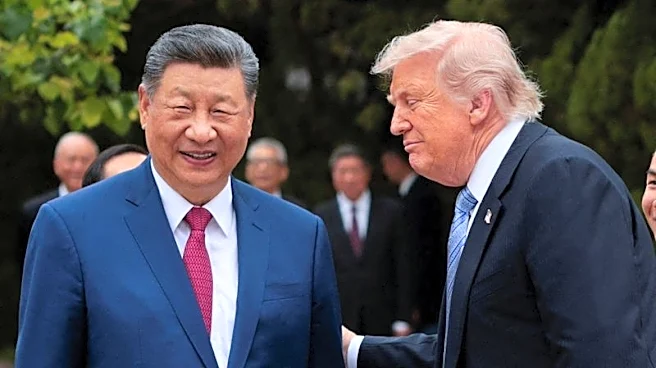
China has agreed to increase its trade of U.S. agricultural products, including beef and poultry, following a summit between President Donald Trump and Chinese President Xi Jinping. The agreement, announced by the White House, includes China purchasing
U.S. agricultural goods at an annualized rate of $17 billion for 2026 and maintaining that level through 2028. This development comes as a relief to American farmers who have been adversely affected by the trade war initiated by the Trump administration. The agreement also includes restoring market access for U.S. beef and resuming imports of poultry from states deemed free of bird flu by the U.S. Department of Agriculture. The summit aimed to ease the impact of the trade war on American farmers, who have seen a significant decline in exports to China, particularly soybeans. The two countries also agreed to address non-tariff barriers and market access issues, although specific products were not detailed.
Why It's Important?
The agreement is significant as it offers a potential reprieve for U.S. farmers who have been struggling due to the trade war with China. The agricultural sector, particularly soybean farmers, has been hit hard by the tariffs and retaliatory measures, leading to a substantial decrease in exports to China. The commitment from China to purchase U.S. agricultural products could stabilize the market and provide much-needed relief to farmers. Additionally, the agreement may help improve the strained economic relationship between the U.S. and China, which has been a source of global economic uncertainty. The restoration of market access for U.S. beef and poultry also opens up significant export opportunities for American producers.
What's Next?
The next steps involve both countries working to implement the agreed-upon measures and addressing outstanding issues related to non-tariff barriers and market access. The U.S. will need to ensure that its agricultural products meet China's import requirements, while China will need to follow through on its purchasing commitments. The success of this agreement could pave the way for further negotiations and potentially more comprehensive trade deals between the two nations. However, the lack of immediate confirmation from Beijing and the absence of specific product details suggest that further discussions may be necessary to solidify the agreement.