
What's Happening?
The U.S. dollar has seen a rise for the second consecutive session, driven by ongoing uncertainty in the Middle East, which has led investors to seek the dollar as a safe haven. The dollar's strength is also
influenced by the Federal Reserve's monetary policy outlook, with expectations that interest rates will remain unchanged in the near term. This comes as the market anticipates a U.S. inflation report, which is expected to show a 0.6% rise in consumer prices for the past month. The report's outcome could reinforce the Federal Reserve's stance on maintaining current interest rates. Meanwhile, the euro and Japanese yen have weakened, with the euro falling 0.33% to $1.1744 and the yen experiencing volatility amid speculation of potential currency intervention.
Why It's Important?
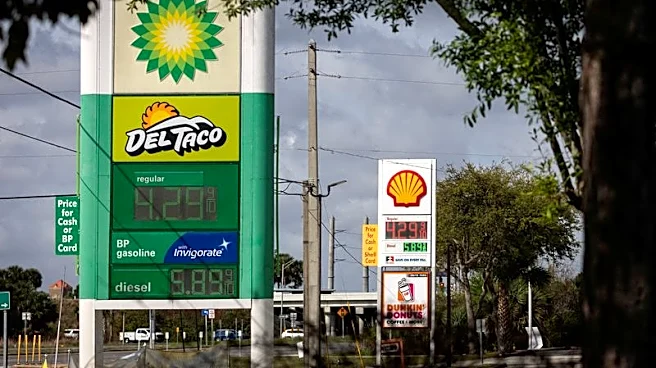
The strength of the U.S. dollar has significant implications for global markets, particularly for economies reliant on oil imports, as seen with the eurozone and Japan. A strong dollar can lead to increased costs for these economies, affecting their trade balances and economic stability. The Federal Reserve's decision on interest rates is crucial, as it influences borrowing costs, consumer spending, and overall economic growth in the U.S. and abroad. The anticipated inflation report will be a key indicator for the Fed's policy direction, impacting financial markets and investor strategies. Additionally, the geopolitical tensions in the Middle East add a layer of complexity, as they can affect oil prices and, consequently, global economic conditions.
What's Next?
Investors and policymakers will closely monitor the upcoming U.S. inflation report, as its findings could shape the Federal Reserve's future monetary policy decisions. Should inflation exceed expectations, it may prompt discussions on potential rate hikes to curb inflationary pressures. Conversely, lower-than-expected inflation could reinforce the current stance of maintaining rates. The geopolitical situation in the Middle East will also be watched, as any escalation could further impact oil prices and global economic stability. Market participants will be attentive to any statements from the Federal Reserve and other central banks, as well as developments in the Middle East, to adjust their strategies accordingly.