

What's Happening?
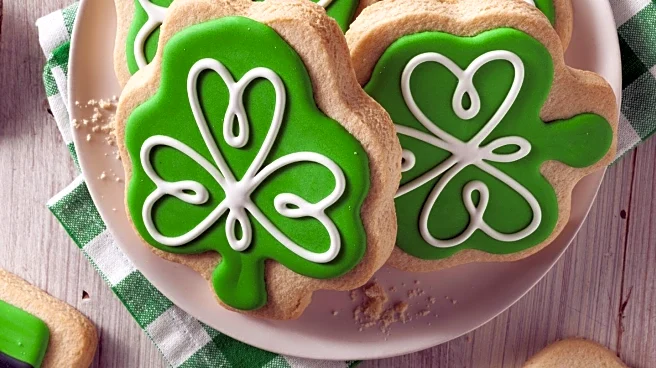
St. Patrick's Day, traditionally a quiet religious observance in Ireland, has evolved into a global celebration, particularly in the United States. The day is marked by wearing green and enjoying Irish-themed festivities, reflecting the cultural impact
of Ireland on America. Historically, Ireland has enriched the world through its literary contributions, with figures like George Bernard Shaw and James Joyce. The Irish influence extends to the U.S., where 23 presidents have been of Irish descent. The celebration of St. Patrick's Day in America has transformed the holiday into a more festive occasion in Ireland itself. This transformation underscores the complex relationship between Ireland and America, where cultural exchanges have led to mutual influences, such as the introduction of fast food in Ireland and the global spread of St. Patrick's Day celebrations.
Why It's Important?
The evolution of St. Patrick's Day from a religious observance to a global celebration highlights the significant cultural exchange between Ireland and the United States. This exchange has led to a deeper appreciation of Irish culture worldwide, fostering tourism and cultural diplomacy. The celebration in America has contributed to Ireland's economy by promoting Irish products and tourism. Additionally, the historical ties between the two nations, including the Irish descent of many U.S. presidents, emphasize the longstanding relationship that influences political and social dynamics. The celebration of Irish culture in America also reflects broader themes of immigration and cultural integration, showcasing how ethnic heritage can shape national identity and international relations.
What's Next?
As St. Patrick's Day continues to grow in popularity, both Ireland and the United States may see increased cultural and economic exchanges. Ireland might leverage this global interest to boost tourism and promote its cultural heritage further. In the U.S., the celebration could lead to more initiatives that highlight Irish-American contributions to society, potentially influencing immigration policies and cultural programs. The ongoing celebration may also encourage other nations to adopt similar festivities, expanding the global reach of Irish culture. Stakeholders in tourism and cultural industries are likely to capitalize on this trend, fostering international partnerships and cultural diplomacy.
Beyond the Headlines
The transformation of St. Patrick's Day into a global celebration raises questions about cultural appropriation and authenticity. As the holiday becomes more commercialized, there is a risk of diluting its original religious significance. This shift reflects broader societal trends where cultural traditions are adapted for mass consumption, potentially leading to debates about preserving cultural heritage. Additionally, the celebration highlights the role of diaspora communities in shaping cultural narratives, as Irish-Americans have played a key role in popularizing the holiday. This dynamic underscores the importance of understanding cultural identity in a globalized world, where traditions can be both preserved and transformed.