



What's Happening?
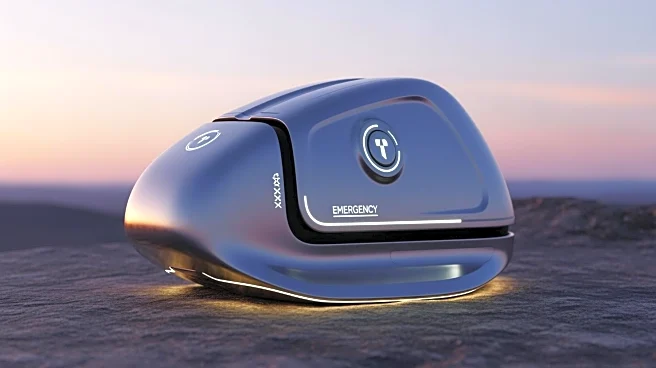
Momentum Technologies, a French company, has introduced a line of emergency survival capsules called LifePods, designed to provide immediate refuge during disasters such as tsunamis, floods, and earthquakes. The concept was developed by company founder
Cédric Choffat following the 2011 tsunami in Japan, which highlighted the need for rapid-response shelters. The LifePods are portable mini-bunkers that can seal in 10 seconds, offering protection against various threats including ballistic, fire, and seismic events. The product lineup includes the B-01 for ballistic threats, the W-01 for water-related disasters, and the Q-01 for seismic scenarios. Each model is equipped with safety features such as harnesses, air filtration systems, and optional equipment like food rations and GPS beacons. The company has already set market release dates and prices for these models, indicating a move from concept to commercialization.
Why It's Important?
The introduction of LifePods represents a significant advancement in disaster preparedness technology, offering a new level of safety for individuals and communities vulnerable to natural and man-made disasters. By providing a rapid-deployment shelter option, these capsules could potentially save lives in situations where traditional evacuation routes are compromised. The product's versatility in addressing multiple types of emergencies makes it a valuable tool for households, schools, and other institutions. The commercialization of such technology also reflects a growing market for personal safety equipment, driven by increasing awareness of climate change impacts and geopolitical tensions. This development could influence public policy and emergency management strategies, encouraging investment in innovative safety solutions.
What's Next?
Momentum Technologies plans to release the B-01 and W-01 models in 2026, followed by the Q-01 in 2027. As the company moves towards full-scale production, it may seek partnerships with government agencies and disaster relief organizations to expand the reach of LifePods. The success of these products could lead to further innovations in the field of emergency preparedness, potentially inspiring other companies to develop similar technologies. Additionally, public and private sector stakeholders may begin to incorporate such solutions into their disaster response plans, enhancing overall community resilience.