
What's Happening?
Dewpoint Innovations, a startup founded by University of Sydney researchers, has developed a nanoengineered paint designed to cool buildings and harvest water from the air. This innovative paint uses passive
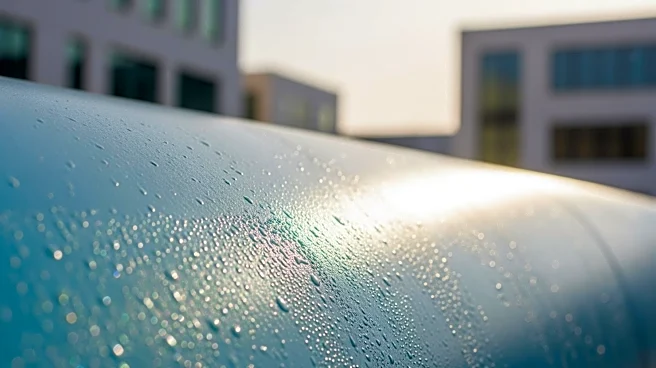
radiative cooling to reflect the sun's energy, reducing heat absorption and keeping surfaces cooler than the surrounding air. In trials, the paint demonstrated a solar reflectance of up to 96%, significantly reducing the heat load on buildings. Additionally, the paint can collect water from the air, providing a supplemental water source. The technology aims to address urban heat island effects and water scarcity, with potential applications in both human and wildlife environments.
Why It's Important?
The development of Dewpoint's paint is significant as it offers a scalable solution to combat urban heat and water scarcity, two pressing issues exacerbated by climate change. By reducing reliance on air conditioning, the paint can lower energy consumption and carbon emissions in urban areas. Furthermore, its ability to harvest water from the air provides an alternative water source, which is crucial in regions facing water shortages. The paint's dual functionality could transform urban planning and building design, promoting sustainability and resilience in cities.
What's Next?
Dewpoint Innovations plans to conduct more extensive trials of its paint in Australia and potentially overseas, aiming for commercialization through Haymes Paint. The company is working to overcome industry barriers, such as the need for independently validated performance and compatibility with standard application methods. As sustainability becomes increasingly important in construction, demand for such cooling technologies is expected to rise. Dewpoint envisions its paint becoming a standard tool for city planners and architects, integrated into urban development frameworks.
Beyond the Headlines
The paint's development highlights the growing trend of passive radiative cooling technologies, which offer energy-efficient solutions to climate challenges. While challenges remain, such as durability and performance in variable weather, ongoing research and improvements in materials are expected to enhance the technology's reliability. As these products become more widely adopted, they could play a crucial role in reducing urban temperatures, cutting emissions, and securing water supplies without relying on energy-intensive methods.