




What's Happening?
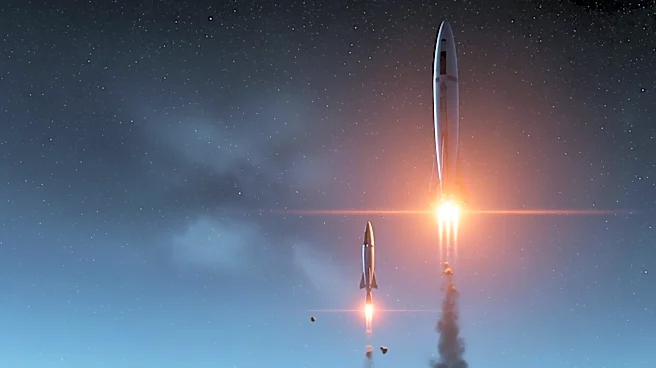
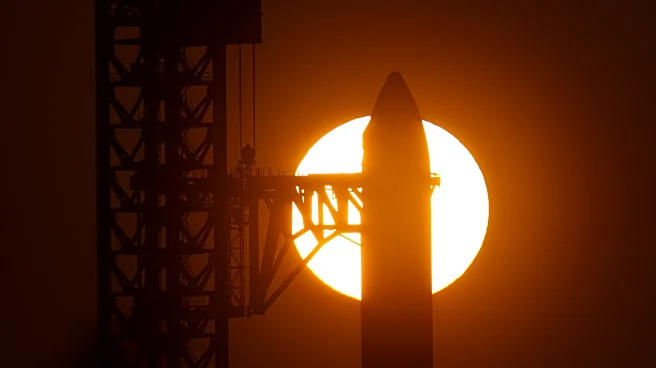
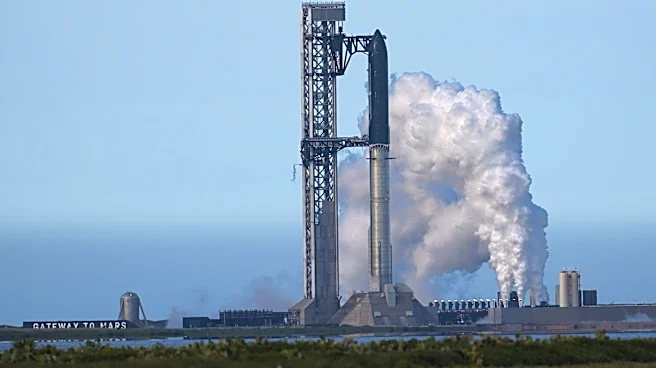
SpaceX has conducted the first test launch of its upgraded Starship V3 rocket, marking a significant milestone for the company. The 407-foot rocket, touted as the most powerful ever built, was launched from SpaceX's Starbase in Texas. During the test,
the upper stage of the rocket successfully separated and continued into space, deploying 20 Starlink satellite simulators and two modified satellites. However, the Super Heavy booster, which was supposed to perform a simulated landing in the Gulf of Mexico, failed to re-ignite its engines for a sustained burn, resulting in its descent into the water where it likely exploded. Despite the setback with the booster, the test was crucial for SpaceX as it tested the new Starship V3 hardware and a newly developed launchpad.
Why It's Important?
This test launch is pivotal for SpaceX as it continues to develop its Starship program, which is integral to its long-term goal of making life multi-planetary. The success of Starship is crucial for future NASA missions to the moon and Mars, as well as for deploying advanced Starlink satellites, which are currently the only profitable segment of SpaceX's business. The launch also coincides with SpaceX's upcoming IPO, expected to raise around $75 billion, which will support further development and pay off debts related to other ventures. The outcome of this test could influence investor confidence and the company's valuation as it prepares to list on the Nasdaq.
What's Next?
Following this test, SpaceX will likely analyze the data to address the issues encountered with the booster and refine the Starship V3 design. The company is expected to continue testing to ensure the reliability of the rocket for future missions. As SpaceX approaches its IPO, the results of these tests could impact its market performance and investor interest. Additionally, the company will focus on meeting its commitments to NASA and expanding its Starlink satellite network, which are critical to its financial and operational goals.