
What's Happening?
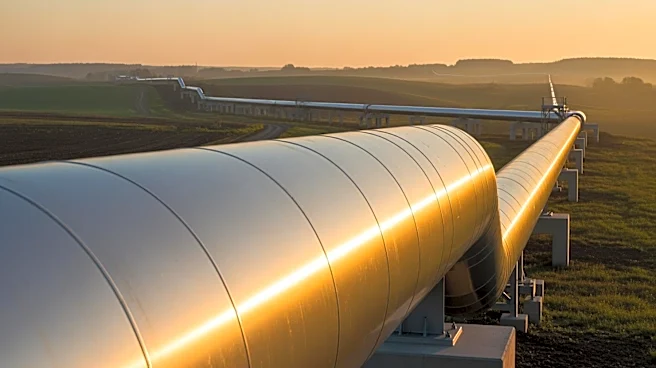
Williams has officially begun construction on the Northeast Supply Enhancement (NESE) project, an expansion of its existing Transco pipeline system. The groundbreaking ceremony took place at Floyd Bennett
Field in Brooklyn, attended by federal and state officials, labor leaders, and project partners. The NESE project aims to add 400,000 dekatherms per day of capacity, sufficient to serve approximately 2.3 million homes, to meet the growing energy demand in the Northeast. This expansion is designed to improve grid stability and supply security across New York, New Jersey, and Pennsylvania, particularly during peak winter demand. The project is expected to be operational by the fourth quarter of 2027, providing reliable and affordable natural gas to homes, businesses, and critical infrastructure.
Why It's Important?
The NESE project is significant as it addresses the increasing energy demand in the Northeast, a region that experiences high energy consumption, especially during winter. By enhancing the capacity of the Transco pipeline system, the project aims to stabilize the energy grid and ensure a consistent supply of natural gas. This is crucial for maintaining the operation of homes, businesses, and essential services. Additionally, the project is expected to moderate electricity costs over time by improving fuel availability and system flexibility. The construction and operation of NESE will also support thousands of jobs and contribute hundreds of millions of dollars to local and regional economies, providing long-term economic benefits.
What's Next?
With construction permits secured, the NESE project is on track to be completed by late 2027. As the project progresses, stakeholders, including energy providers and local governments, will likely monitor its impact on energy prices and supply stability. The project's completion is expected to reduce CO2 emissions by over 13,000 tons, aligning with environmental goals to lower carbon footprints. The use of modern materials and electric motor-driven compressors will further enhance the project's environmental benefits by reducing emissions and noise compared to older infrastructure.
Beyond the Headlines
The NESE project not only addresses immediate energy needs but also represents a strategic move towards energy security and sustainability. By reducing reliance on higher-carbon fuels, the project contributes to broader environmental objectives. The initiative also highlights the importance of infrastructure development in supporting economic growth and energy independence. As the U.S. continues to navigate energy challenges, projects like NESE underscore the role of infrastructure in achieving a balance between energy demand, environmental responsibility, and economic prosperity.