


What's Happening?
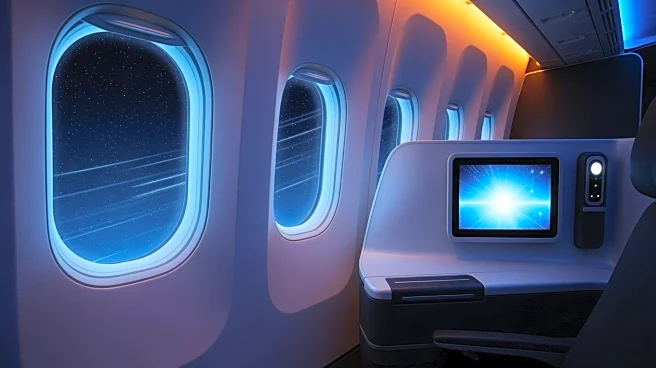
United Airlines is in the process of installing Starlink internet across its fleet, aiming to provide high-speed internet access to passengers during flights. This initiative is part of a broader trend where airlines are enhancing in-flight entertainment
options by partnering with streaming services. United's collaboration with Starlink, a SpaceX-powered satellite internet service, allows passengers to access broadband speeds comparable to home internet, even at high altitudes. This development is part of a larger movement in the airline industry to offer more personalized entertainment options, allowing passengers to stream content from platforms like Netflix, YouTube, and Spotify directly to their devices. United is also upgrading its seatback screens to support 4K video, integrating with services like Spotify to offer a seamless entertainment experience.
Why It's Important?
The introduction of high-speed internet on flights represents a significant shift in the airline industry, potentially transforming the in-flight entertainment landscape. For airlines, this move could enhance customer satisfaction by providing more entertainment choices and improving the overall travel experience. For streaming services, it offers a new avenue to reach captive audiences, potentially increasing subscriptions and viewership. However, this development could impact traditional in-flight entertainment models, which have been a revenue source for Hollywood through licensing deals. The ability for passengers to access their own streaming accounts may reduce the demand for pre-loaded content, challenging the existing business model for in-flight entertainment providers.
What's Next?
As more airlines adopt high-speed internet services like Starlink, the competition to offer the best in-flight entertainment experience is likely to intensify. Airlines may continue to explore partnerships with various streaming platforms to differentiate their offerings. Additionally, the integration of new technologies could lead to further innovations in how content is delivered and consumed during flights. The impact on traditional in-flight entertainment providers and Hollywood's licensing revenue will be closely monitored, as the industry adapts to these changes. Airlines will need to balance the benefits of offering personalized entertainment with the potential loss of revenue from traditional content licensing.