





What's Happening?
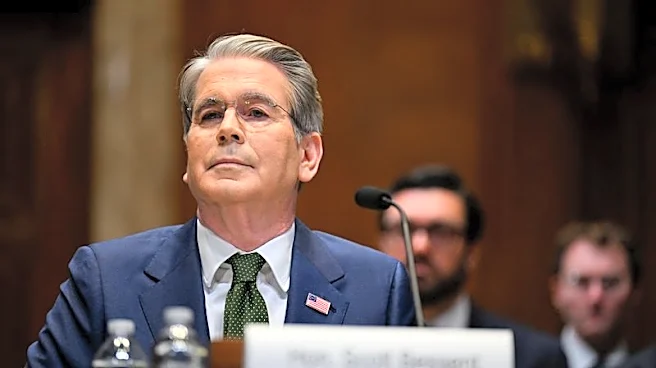
The United States is in discussions to establish currency swap lines with Gulf and Asian countries, as announced by Treasury Secretary Scott Bessent. This initiative comes in response to requests from allies seeking financial support to manage the economic
impacts of the ongoing Iran war. The proposed swap lines aim to enhance dollar liquidity and promote trade and investment with the U.S. Bessent highlighted that these countries possess strong sovereign balance sheets and significant dollar reserves, which could facilitate the establishment of new U.S. dollar funding centers in these regions. Currently, the Federal Reserve maintains permanent swap lines with major central banks, including those of Canada, Japan, and the European Union. The expansion of these facilities to include Gulf and Asian nations would represent a significant policy shift.
Why It's Important?
The establishment of new dollar swap lines with Gulf and Asian countries could have substantial implications for international finance and U.S. economic policy. By reinforcing dollar liquidity globally, the U.S. can strengthen its economic ties and influence in these regions. This move could also stabilize financial markets affected by geopolitical tensions, such as the Iran war, by providing a reliable source of dollar funding. For the U.S., this strategy could enhance its economic leverage and support its allies in managing energy shocks and other economic disruptions. Additionally, it reflects a broader effort to maintain the dollar's dominance in global trade and finance.
What's Next?
The potential expansion of swap lines is contingent upon the confirmation of Kevin Warsh as the new Federal Reserve Chair. Warsh has indicated a willingness to collaborate with the Treasury on international finance issues, which could facilitate the implementation of these swap lines. The U.S. Senate's decision on Warsh's nomination will be a critical factor in determining the timeline and feasibility of this initiative. If approved, the U.S. could see increased financial cooperation with Gulf and Asian nations, potentially leading to more stable economic relations and enhanced global dollar liquidity.