


What's Happening?
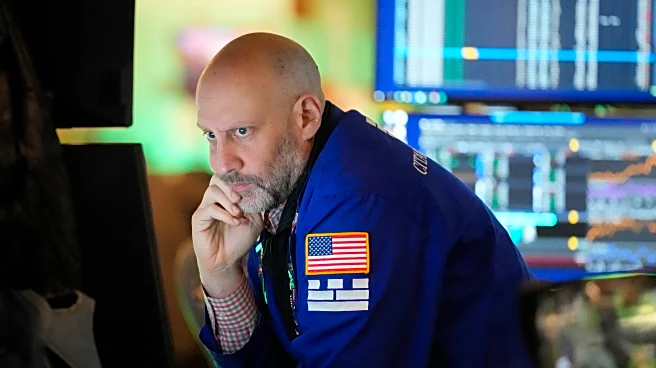
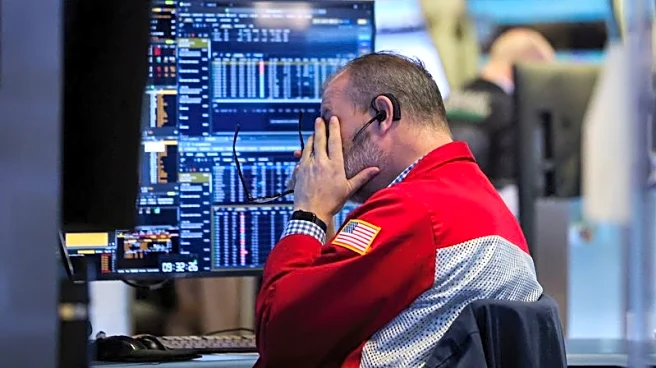
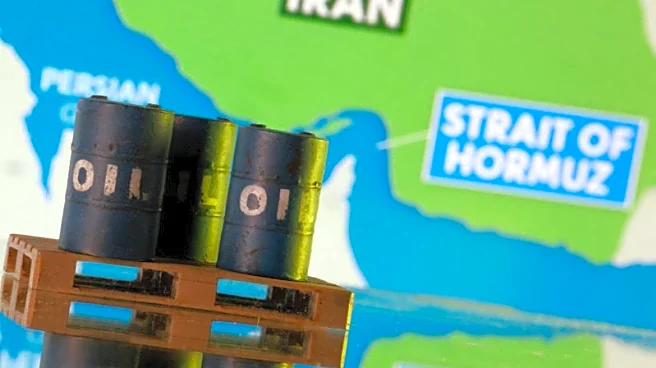
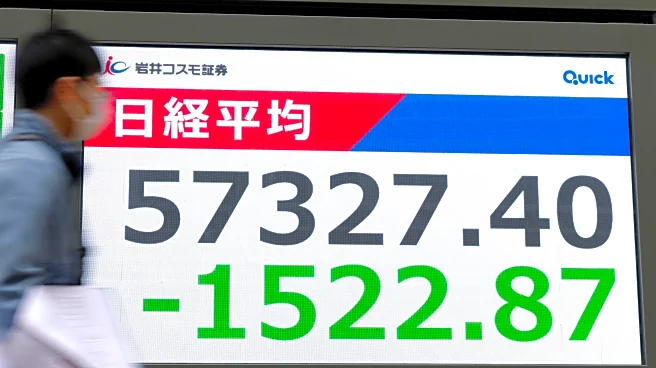
Global stock markets experienced declines while oil prices surged due to escalating tensions in the Middle East. The conflict has particularly affected the Strait of Hormuz, a critical passage for global oil supply, leading to concerns about potential
disruptions. Asian shares fell by 1.3%, and US equity-index futures declined by 0.6%. The situation was somewhat alleviated by President Trump's openness to lifting sanctions on Iran if its new leader shows pragmatism, as reported by the New York Times. Additionally, Iran has expressed a willingness to resume talks with the US, according to the Wall Street Journal. Despite these developments, the market remains cautious, with investors seeking safe-haven assets like gold, which rose by 1%. The dollar also saw gains, although it later pared back, and Treasuries gave up earlier gains.
Why It's Important?
The escalation in the Middle East has significant implications for global markets, particularly due to the strategic importance of the Strait of Hormuz, through which about one-fifth of the world's oil supply passes. Any prolonged disruption could lead to a substantial increase in oil prices, potentially reaching as high as $108 per barrel, according to Bloomberg Economics. This would have a ripple effect on inflation and economic stability worldwide. The situation adds to existing market anxieties over artificial intelligence and credit vulnerabilities, which have already been affecting investor sentiment. The potential for increased volatility in oil, gold, currencies, and equities underscores the need for diversification and a long-term investment perspective.
What's Next?
Investors are likely to continue monitoring the situation closely, with a focus on any signs of de-escalation or further conflict. The market's response will depend heavily on developments in the Middle East and any diplomatic efforts to resolve tensions. In the meantime, elevated volatility is expected across various asset classes. Analysts suggest that geopolitical shocks often lead to sharp initial market reactions that may fade if the conflict remains contained. However, the uncertainty surrounding the situation means that markets could remain volatile in the near term.