

What's Happening?
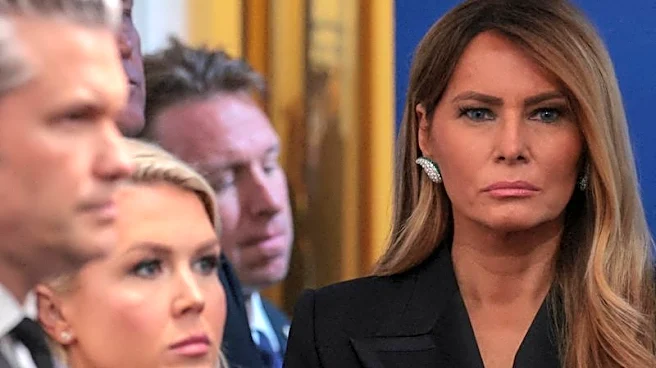
Jimmy Kimmel, host of 'Jimmy Kimmel Live!', has faced backlash from President Trump and Melania Trump following a joke he made about the First Lady. During a segment where Kimmel pretended to host the White House Correspondents' Dinner, he described Melania Trump as having
'the glow of an expectant widow.' This comment was made prior to a shooting incident at the event, which was interrupted by an armed individual. Both President Trump and Melania Trump have called for ABC to fire Kimmel, accusing him of spreading hate and inciting violence. Kimmel, however, defended his joke as a light-hearted comment on the age difference between the Trumps, emphasizing that it was not intended to incite violence. He expressed regret over the traumatic experience at the event but maintained his stance on free speech.
Why It's Important?
The incident highlights ongoing tensions between media figures and political leaders, particularly in the context of free speech and comedic expression. Kimmel's refusal to apologize underscores the broader debate over the limits of satire and the responsibilities of public figures in their commentary. The calls for Kimmel's firing by the Trumps reflect a significant clash between political authority and media freedom, raising questions about the influence of political figures on media content and the potential chilling effects on free expression. This situation also illustrates the polarized nature of current U.S. political discourse, where humor and criticism are often met with severe backlash.
What's Next?
ABC has not commented on the situation, leaving Kimmel's future with the network uncertain. The network's response, or lack thereof, could set a precedent for how media companies handle similar controversies involving their talent. Additionally, the incident may prompt further discussions about the role of comedy in political discourse and the boundaries of acceptable speech. Stakeholders, including media organizations, political leaders, and advocacy groups, may weigh in on the implications for free speech and media responsibility.