





What's Happening?
The U.S. economy experienced a 2% growth rate from January to March 2026, recovering from a 43-day federal government shutdown in late 2025. This growth marks an improvement from the previous quarter's 0.5% expansion. The Commerce Department reported
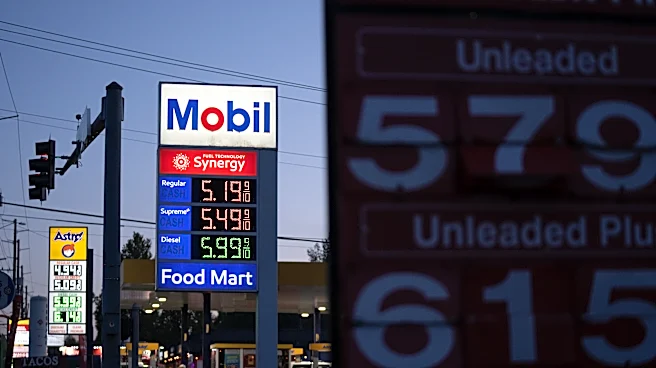
that federal spending and investment significantly contributed to this growth, with a 9.3% annual increase. However, consumer spending, which constitutes 70% of the economy, slowed to 1.6%, and the housing market continued to decline. Business investment, particularly in artificial intelligence, rose by 8.7%. The economic outlook is clouded by the ongoing conflict with Iran, which has led to a blockade of the Strait of Hormuz, affecting global oil and gas supplies and driving up energy prices.
Why It's Important?
The economic growth in early 2026 is crucial as it indicates a recovery from the federal shutdown, yet the ongoing conflict with Iran poses significant risks. The blockade of the Strait of Hormuz has increased energy prices, contributing to inflation and impacting consumer spending. The Federal Reserve has maintained its interest rates due to the uncertainty caused by the conflict. The situation highlights the vulnerability of the U.S. economy to international geopolitical tensions, particularly in regions critical to global energy supplies. The growth in business investment, especially in AI, suggests a shift towards technology-driven economic activities, which could have long-term implications for the U.S. economic landscape.
What's Next?
The U.S. economy's trajectory will likely depend on the resolution of the conflict with Iran and its impact on global energy markets. Continued investment in technology sectors may drive future growth, but consumer spending and the housing market remain areas of concern. The Federal Reserve's monetary policy will be closely watched as it navigates the challenges of inflation and economic uncertainty. The government's response to the Iran conflict, including potential diplomatic or military actions, will also play a critical role in shaping the economic outlook.