







What's Happening?
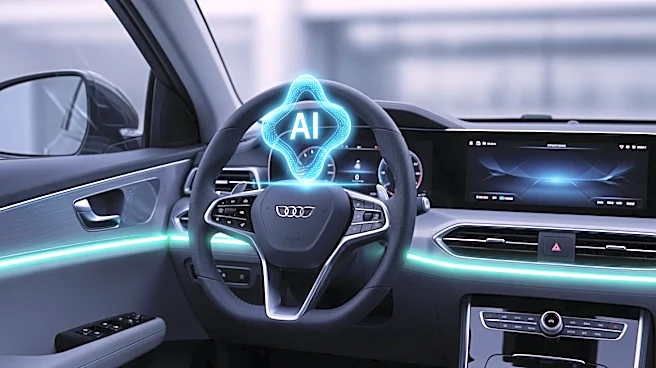
Rivian, the electric truck and SUV manufacturer, has announced the rollout of its new AI-powered in-vehicle assistant, Rivian Assistant, to all compatible R1T and R1S models. This update is available to owners subscribed to the Connect Plus cellular data
plan and will also be included in the upcoming R2 models. The Rivian Assistant is integrated directly with the vehicle's hardware and software, allowing it to access almost all vehicle systems. This integration enables advanced features such as natural language processing for voice commands, context-aware responses, and real-time vehicle data access. The assistant can perform tasks ranging from basic vehicle controls to more complex functions like adjusting drive modes and managing Google Calendar events. This development follows Rivian's announcement at its Autonomy & AI Day event last year, where it detailed plans for using AI to enhance vehicle functionality.
Why It's Important?
The introduction of Rivian Assistant marks a significant step in the evolution of in-vehicle technology, setting Rivian apart from competitors like Tesla by offering a more integrated and comprehensive AI system. This advancement is likely to enhance user experience by providing more intuitive and personalized vehicle interactions. The positive reception of this feature has contributed to an increase in Rivian's stock price, reflecting investor confidence in the company's technological innovations. For consumers, the assistant's ability to learn driver preferences and provide context-aware responses could lead to safer and more efficient driving experiences. Additionally, the integration with Google Calendar and other potential future services could streamline daily tasks for users, making Rivian vehicles more appealing to tech-savvy consumers.
What's Next?
Rivian plans to expand the capabilities of its AI assistant by integrating additional external services beyond Google Calendar. This could include partnerships with other tech companies to enhance the assistant's functionality and provide more value to users. The company will also need to address privacy concerns, ensuring that data collected by the assistant is handled responsibly and securely. As the assistant continues to evolve, Rivian will likely focus on refining its natural language processing capabilities and expanding its language support beyond English. The success of these initiatives could further solidify Rivian's position in the competitive electric vehicle market.