
What's Happening?
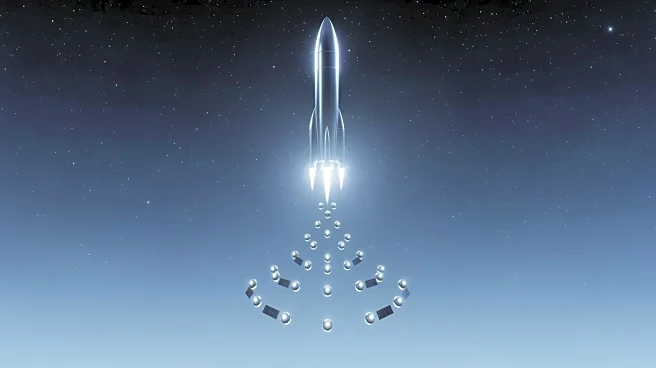
SpaceX successfully launched its Falcon 9 rocket on February 7, 2026, marking a return to its regular launch schedule after a brief stand down. The mission, known as Starlink 17-33, deployed 25 Starlink satellites
into low Earth orbit. The launch took place from Vandenberg Space Force Base and was followed by the successful landing of the Falcon 9 first stage booster on the drone ship 'Of Course I Still Love You' in the Pacific Ocean. This mission follows an in-flight anomaly during a previous launch, which led to a temporary halt in operations. The Federal Aviation Administration (FAA) has since closed its investigation into the incident, allowing SpaceX to resume flights.
Why It's Important?
The resumption of SpaceX's Falcon 9 launches is significant for the company's ongoing efforts to expand its Starlink satellite constellation, which aims to provide global internet coverage. The successful deployment of additional satellites enhances the network's capacity and reliability. Moreover, the quick resolution of the in-flight anomaly and the FAA's approval to resume flights underscore SpaceX's commitment to safety and operational efficiency. This development is crucial for maintaining investor confidence and ensuring the continuity of SpaceX's ambitious launch schedule, which is vital for its commercial and governmental contracts.
What's Next?
SpaceX is expected to continue its aggressive launch schedule, with upcoming missions including the Starlink 6-103 mission and the Crew-12 launch to the International Space Station. The company will likely focus on further improving its launch reliability and addressing any technical issues to prevent future anomalies. Stakeholders, including NASA and commercial partners, will be closely monitoring SpaceX's performance to ensure the safety and success of future missions.