



What's Happening?
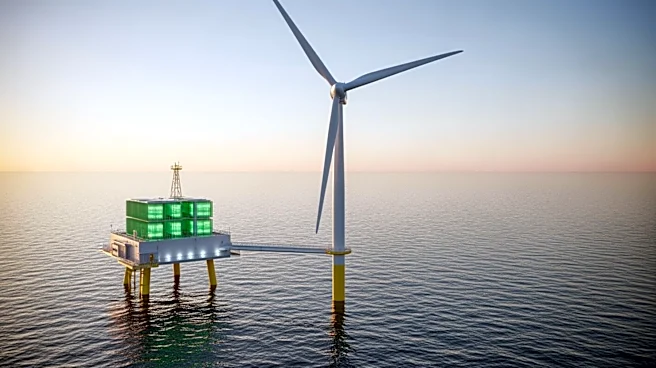
Aikido Technologies, a company led by San Francisco engineer Sam Kanner, is planning to build data centers inside the hollow legs of floating wind turbines in the North Sea. This innovative approach aims to address the challenges of congested power grids
and water shortages in various regions. The first prototype, a 100-kilowatt unit paired with a refurbished Vesta V-17 turbine, is expected to launch off the coast of Norway by the end of 2026. The design utilizes the existing structure of offshore wind platforms, where computing hardware will be installed in the upper section of each leg. The cooling system will leverage the cold North Sea water to manage the heat generated by the servers. If successful, this method could revolutionize the location and operation of data centers, particularly for artificial intelligence workloads.
Why It's Important?
This development is significant as it presents a potential solution to the growing demand for data center capacity amidst power grid constraints. By utilizing wind turbines, Aikido Technologies could offer a cost-competitive alternative to traditional data centers, which are often limited by land availability and environmental concerns. The project aligns with broader efforts to harness offshore wind power, as seen in recent agreements by European nations to transform the North Sea into a major source of clean energy. If the prototype proves successful, it could lead to larger projects and influence how data centers are integrated with renewable energy sources, potentially reducing the carbon footprint of the tech industry.
What's Next?
The success of the prototype will determine the feasibility of scaling up the project. Aikido Technologies has indicated plans for a larger 15 to 18 megawatt project off the United Kingdom coast as early as 2028. The company will need to address challenges such as power stability, environmental impact, and regulatory scrutiny. Additionally, the project will require collaboration with maritime authorities to ensure security and maintenance in the harsh marine environment. The outcome of this initiative could influence future policies and investments in renewable energy and data infrastructure.
Beyond the Headlines
The integration of data centers with wind turbines raises questions about the environmental impact of heat discharge into marine ecosystems. While the closed-loop cooling system aims to minimize direct thermal effects, the full ecological implications remain to be studied. Furthermore, the project highlights the potential for innovative uses of existing infrastructure to meet technological demands, which could inspire similar initiatives in other sectors. The approach also underscores the importance of cross-industry collaboration in addressing global challenges such as climate change and resource scarcity.