




What's Happening?
The indoor farming technology market is anticipated to grow significantly, reaching USD 69.61 million by 2030, with a compound annual growth rate (CAGR) of 11.4%. This growth is driven by the increasing demand for sustainable agriculture, urbanization,
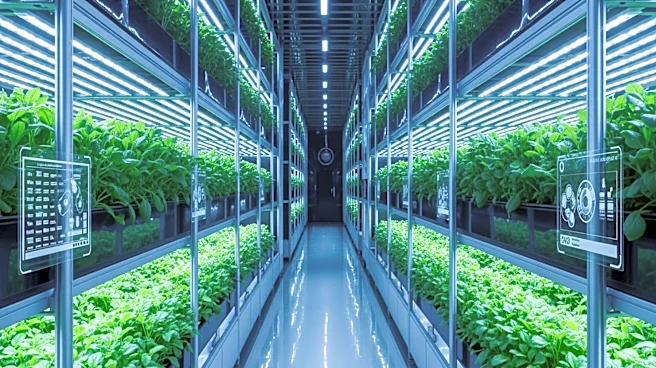
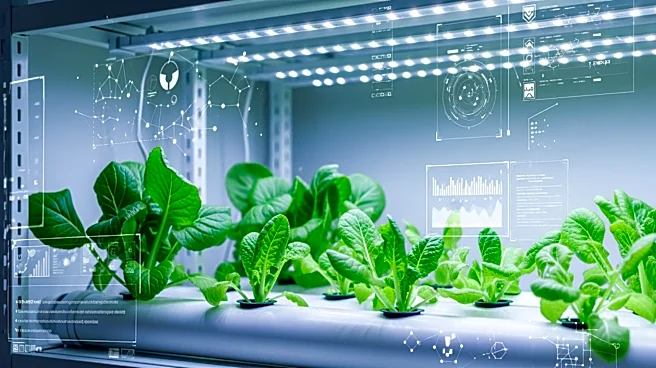
and advancements in controlled environment agriculture technologies. North America currently dominates the market, contributing approximately 35-40% of global revenue, due to advanced technology adoption and a strong investment ecosystem. The U.S. leads within the region, driven by high demand for organic produce and established supply chains. Meanwhile, Asia-Pacific is the fastest-growing region, fueled by urban population growth and increasing food demand. Key technologies such as hydroponics and vertical farming are prominent due to their efficiency and reduced dependency on soil-based cultivation.
Why It's Important?
The expansion of the indoor farming technology market is crucial for addressing global food security concerns, especially in urban areas where land is scarce. By enabling year-round cultivation with minimal land usage, indoor farming supports sustainable food production systems. The adoption of technologies like AI-driven monitoring systems and IoT-enabled farming is enhancing productivity and operational efficiency. This market growth also reflects a shift towards pesticide-free produce, aligning with consumer preferences for organic food. Additionally, the sector is attracting substantial investments from venture capitalists and private equity firms, indicating strong confidence in its potential to transform traditional agriculture.
What's Next?
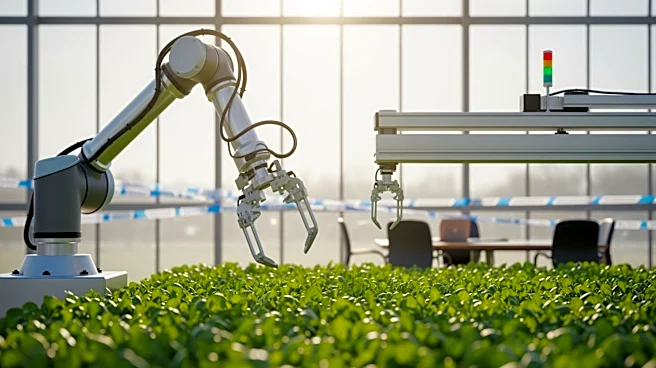
As the market continues to grow, further advancements in technology and increased investments are expected. Governments worldwide are likely to enhance support through subsidies and policy frameworks to promote sustainable agriculture. The integration of AI and automation technologies will likely become more prevalent, offering opportunities to enhance efficiency and reduce labor costs. Companies may also focus on developing energy-efficient solutions to address high operational costs associated with indoor farming. Strategic partnerships and collaborations between agritech firms, retailers, and governments are expected to expand market reach and drive further innovation.
Beyond the Headlines
The rise of indoor farming technology could lead to significant shifts in agricultural practices, potentially reducing the environmental impact of traditional farming. By minimizing water usage and eliminating the need for pesticides, indoor farming presents a more sustainable alternative. However, challenges such as high initial capital investment and energy consumption remain. Addressing these issues will be crucial for the widespread adoption of indoor farming technologies. Additionally, the market's reliance on specialized equipment and skilled professionals highlights the need for continued innovation and training to support growth.