







What's Happening?
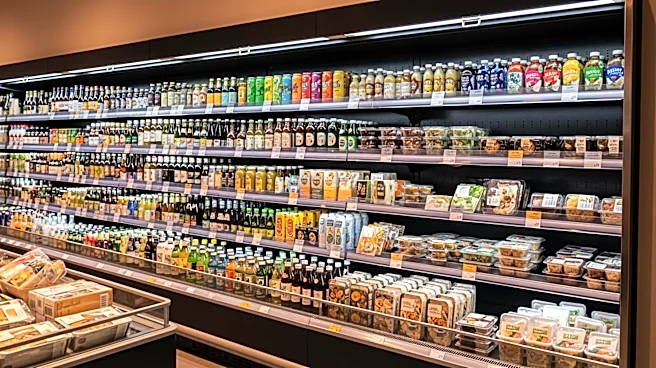
Convenience stores are increasingly focusing on offering innovative and exciting beverage flavors to drive sales, particularly in the alcohol segment. According to a report by NIQ, the average convenience store shopper visits three times a week, presenting
a significant opportunity for retailers to increase sales through new product trials and enhanced customer loyalty. Beverages that feature flavor and format innovation are outperforming traditional offerings, especially among Gen Z shoppers. Products like Lucky One Lemonade, a vodka-based ready-to-drink (RTD) beverage, and VMC, a tequila-based canned cocktail, are examples of how retailers are catering to the demand for unique flavors. These products not only appeal to younger legal-age consumers but also offer a chance to engage diverse demographics with flavors they may not be familiar with.
Why It's Important?
The focus on flavor innovation in beverages is crucial for convenience stores aiming to capture the interest of younger consumers, particularly Gen Z, who are known for their preference for novel and exciting products. By expanding their beverage offerings to include unique flavors, retailers can attract incremental sales and encourage repeat visits. This strategy not only helps in retaining existing customers but also in attracting new ones who are eager to explore different taste profiles. The success of products like Lucky One Lemonade and VMC highlights the potential for significant revenue growth in the beverage category, making it a vital area for retailers to invest in.
What's Next?
As the trend towards flavor innovation continues, convenience stores are likely to expand their beverage offerings further to include more diverse and culturally inspired flavors. Retailers may also explore partnerships with popular brands and influencers to create exclusive products that resonate with their target audience. Additionally, the success of current offerings could lead to the introduction of new product lines and flavors, further enhancing the variety available to consumers. This ongoing innovation is expected to drive competition among retailers, pushing them to continuously adapt and evolve their product selections to meet changing consumer preferences.