






What's Happening?
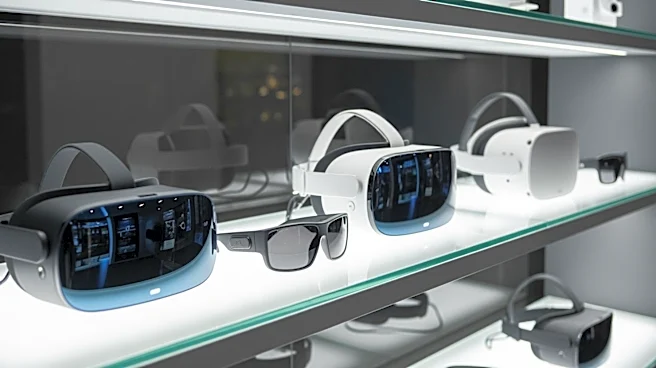
Meta is set to open dedicated sections in 50 Best Buy stores across the United States and Canada to showcase its Quest headsets and smart glasses. These sections, branded as 'Meta Lab', are designed to provide a hands-on experience for customers, featuring
a sleek, 900-square-foot store-in-store layout. The initiative follows Meta's previous ventures of opening a standalone store in Los Angeles and temporary pop-up stores in New York and Las Vegas. The Meta Lab sections will be staffed by 'Meta Sales Specialists' who are trained to offer personalized fittings and guided immersive demos. The first locations to feature these sections will be in San Bernardino, CA, and San Carlos, CA, with additional openings planned in Roseville, MN, Woodland Park, NJ, Greenville, SC, and Columbus, OH throughout the summer. By the end of 2026, Meta aims to have 50 such sections operational in Best Buy stores.
Why It's Important?
This expansion represents a strategic move by Meta to enhance its retail presence and directly engage with consumers. By establishing dedicated sections within Best Buy, Meta can offer a more controlled and informative experience, potentially increasing sales and brand loyalty. The presence of trained specialists ensures that customers receive expert guidance, which could improve customer satisfaction and product adoption rates. This initiative also reflects the growing importance of virtual reality and smart technology in consumer electronics, as Meta seeks to solidify its position in these emerging markets. The move could influence other tech companies to adopt similar strategies, potentially reshaping the retail landscape for tech products.
What's Next?
As Meta rolls out these sections, it will be crucial to monitor customer feedback and sales performance to assess the effectiveness of this retail strategy. The success of the Meta Lab sections could lead to further expansion or adaptation of the concept in other retail environments. Additionally, competitors may respond by enhancing their own in-store experiences or forming partnerships with retailers to maintain market share. The broader implications for the retail industry include a potential shift towards more experiential shopping environments, particularly for high-tech products.