
What's Happening?
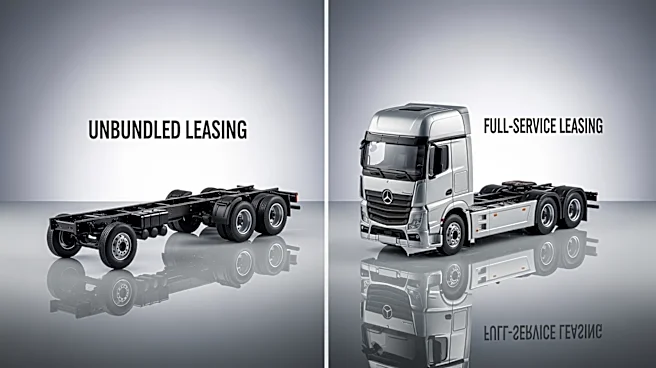
In the trucking industry, fleet structure decisions are increasingly influencing cost management. Two primary models are prevalent: unbundled maintenance and full-service leasing. Unbundling involves separating
truck acquisition, financing, and maintenance, allowing fleets to manage these aspects internally. This model offers cost control and flexibility, particularly beneficial for larger fleets with the capacity to handle variability. Conversely, full-service leasing provides cost predictability through fixed monthly payments that cover maintenance and repairs. However, this convenience often comes at a higher overall cost due to risk premiums and provider margins.
Why It's Important?
The choice between unbundled maintenance and full-service leasing has significant financial implications for trucking companies. Unbundling can lead to cost savings and greater control over expenses, which is crucial in an industry facing high truck prices and tight maintenance labor markets. Fleets that can effectively manage variability may find this model more advantageous. On the other hand, full-service leasing offers simplicity and predictability, appealing to companies prioritizing convenience over cost. The decision impacts fleet operations, budgeting, and long-term financial health, influencing competitive positioning in the trucking market.
Beyond the Headlines
The decision between these models also reflects broader trends in the trucking industry, such as the increasing importance of data analytics and strategic procurement. Companies opting for unbundling may need to invest in technology and expertise to manage their fleets effectively. Additionally, the choice can affect relationships with vendors and maintenance providers, potentially leading to shifts in industry dynamics. As the trucking industry evolves, companies must weigh the benefits of cost control against the convenience of predictable expenses, considering their unique operational needs and market conditions.