





What's Happening?
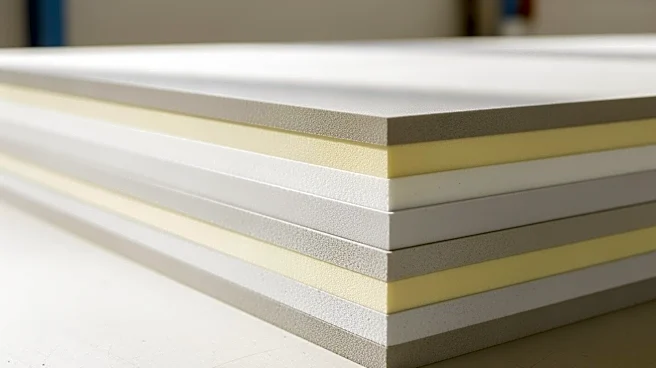
The global market for PIR/PUR insulation boards is projected to experience significant growth from 2026 to 2035, driven by stricter energy performance standards and decarbonization mandates. These insulation boards, known for their superior thermal resistance,
are increasingly used in new construction and energy retrofits across residential, commercial, and industrial sectors. The market is shifting towards higher-performance, fire-rated, and low-carbon products as regulators in Europe, North America, and Asia-Pacific enforce stricter building codes. The expansion of cold storage and refrigeration logistics, particularly in emerging economies, further supports demand. Supply-side dynamics are influenced by raw material cost volatility and innovation in bio-based polyols and recycled content. The competitive landscape includes integrated chemical producers and specialized board manufacturers, with production hubs in Europe, North America, and China.
Why It's Important?
The growth of the PIR/PUR insulation boards market is significant for several reasons. It reflects a global shift towards energy efficiency and sustainability in building practices, driven by regulatory changes and environmental concerns. The increased demand for these boards in cold storage and refrigeration logistics highlights the importance of reliable insulation in maintaining temperature-controlled supply chains, crucial for food safety and pharmaceutical storage. The market's expansion also indicates a broader trend towards decarbonization and the reduction of greenhouse gas emissions in the construction industry. Stakeholders, including contractors and material suppliers, must adapt to evolving regulations and material innovations to remain competitive.
What's Next?
The market is expected to continue its growth trajectory, with global consumption projected to increase at a compound annual growth rate of approximately 4.8% through 2035. This growth will be supported by ongoing tightening of building energy codes, particularly in developed regions like Europe and North America. In Asia-Pacific, rapid urbanization and industrialization will drive demand for insulation in high-rise residential and commercial buildings. The transition to low-global-warming-potential blowing agents will increase production costs but also create opportunities for premium-priced, environmentally compliant products. Stakeholders will need to navigate material substitution risks and regulatory complexities to capitalize on these opportunities.