







What's Happening?
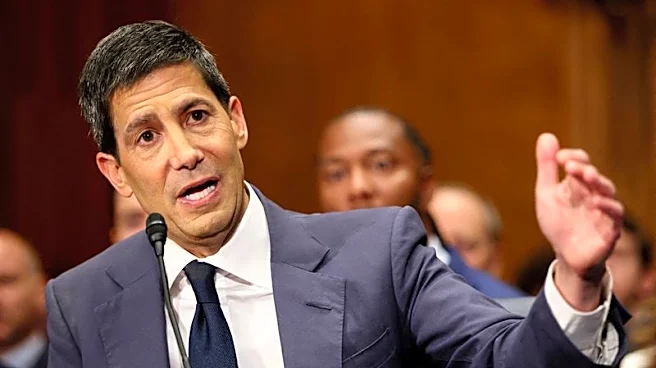
Federal Reserve Board Governor Michael Barr has expressed concerns over proposals to shrink the Federal Reserve's balance sheet, arguing that such actions could undermine financial stability. In a recent speech, Barr emphasized the importance of maintaining
adequate reserves to ensure the resilience of the banking system and the efficiency of the payments system. He highlighted that reserves are crucial for the safety and soundness of banks and that reducing them could lead to increased volatility in money markets. Barr's comments come amid discussions on the Fed's role in financial markets and the potential impact of reducing its footprint. He noted that while the Fed has been gradually increasing its balance sheet to meet demand, proposals to shrink it could have adverse effects, including increased frequency of Fed interventions in markets.
Why It's Important?
The debate over the Federal Reserve's balance sheet size is significant as it touches on the broader issue of financial stability and the Fed's role in the economy. Shrinking the balance sheet could lead to reduced liquidity in the banking system, potentially increasing the risk of financial instability. This is particularly relevant as the U.S. economy faces challenges such as rising federal debt and the diminishing appeal of U.S. Treasuries. The Fed's approach to managing its balance sheet has implications for monetary policy implementation and the overall health of the financial system. Stakeholders, including banks and financial institutions, could be affected by changes in reserve levels, impacting their operations and the broader economy.
What's Next?
As discussions continue, the Federal Reserve will need to balance the need for financial stability with the desire to reduce its market footprint. Future decisions on the balance sheet will likely consider the trade-offs between maintaining adequate reserves and the potential benefits of a smaller balance sheet. The Fed may also explore alternative strategies to manage its role in financial markets without compromising stability. Stakeholders, including policymakers and financial institutions, will be closely monitoring these developments to assess their impact on the economy and financial markets.