



What's Happening?
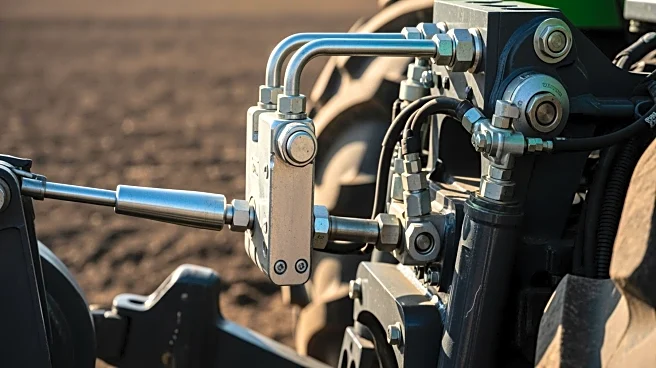
Case IH has introduced significant enhancements to its Farmall 35A and 40A compact tractors, focusing on hydraulic capabilities and loader options. These tractors now feature a wide platform and a spacious step-through design, making them more accessible for operators. The enhancements include a strategically placed loader joystick, ergonomic controls, and clear sight lines to simplify operation. The hydraulic system supports a variety of attachments, offering an optional live third-function loader control and a 2,596-pound capacity 3-point lift. Additionally, the tractors come with a factory-matched loader and a backhoe loader equipped with a quick-mount system for faster setup and improved ground clearance. The tractors are powered by a 1.9-liter,
3-cylinder diesel engine, providing more power and torque while improving fuel efficiency.
Why It's Important?
The enhancements to the Farmall 35A and 40A tractors are significant for the agricultural sector, particularly for small to medium-sized farms that rely on compact tractors for various tasks. The improved hydraulic capabilities and loader options increase the versatility and productivity of these tractors, allowing farmers to perform a wider range of tasks with a single machine. The ergonomic design and enhanced operator comfort can lead to increased efficiency and reduced fatigue for operators, potentially improving overall farm productivity. The introduction of entry-level telematics modem installation also positions these tractors for future technological integration, allowing for real-time monitoring and GPS tracking, which can optimize farm operations.
What's Next?
With the introduction of these enhancements, Case IH is likely to see increased interest from farmers looking to upgrade their equipment for better performance and efficiency. The company may continue to develop and integrate more advanced technologies into their tractor lines, potentially expanding the capabilities of their compact tractors. As farmers adopt these new models, feedback could lead to further refinements and innovations in future releases. Additionally, the agricultural industry may see a trend towards more technologically integrated equipment, as the benefits of real-time monitoring and data-driven decision-making become more apparent.