



What's Happening?
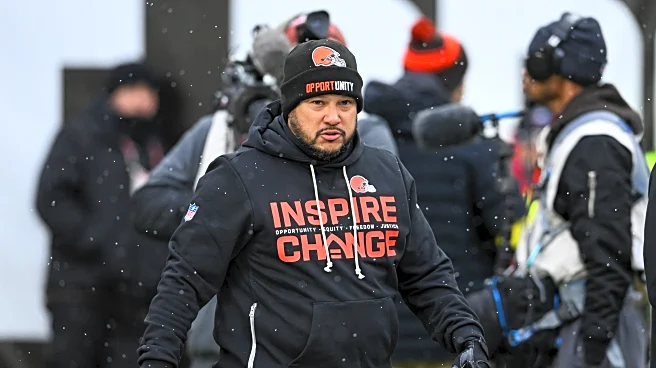
Jim Schwartz, the former defensive coordinator for the Cleveland Browns, has resigned from his position, but the situation is far from resolved. Despite his resignation, Schwartz remains under contract with the Browns through 2026, with an option for 2027. This contractual obligation has created a legal stalemate, as the Browns are unwilling to release him without compensation. The Browns' management is taking a firm stance, unlike previous instances where they allowed other assistants to leave freely. The situation is further complicated by the NFL's rules, which prevent the trading of assistant coaches like players. This has led to speculation about whether another team, such as the Raiders, might attempt to 'buy' Schwartz's freedom by negotiating
a deal that includes compensation buried in a player trade.
Why It's Important?
The standoff between Jim Schwartz and the Cleveland Browns highlights the complexities of NFL contracts and the strategic maneuvers teams may employ to retain valuable coaching assets. This situation underscores the Browns' determination to protect their interests and avoid losing a top-tier coach without receiving something in return. The outcome of this standoff could set a precedent for how NFL teams handle similar situations in the future, potentially influencing contract negotiations and the movement of coaching staff across the league. For Schwartz, the resolution of this impasse will determine his professional future and whether he can pursue opportunities with other teams.
What's Next?
The next steps in this legal standoff are uncertain, but potential developments could include negotiations between the Browns and interested teams to reach a mutually beneficial agreement. If a team like the Raiders is serious about acquiring Schwartz, they may need to engage in creative negotiations to satisfy the Browns' demands. Meanwhile, Schwartz's future in the NFL remains in limbo until a resolution is reached. The situation will likely attract attention from other teams and league officials, as it could influence future contractual practices and the handling of coaching staff movements.