






What's Happening?
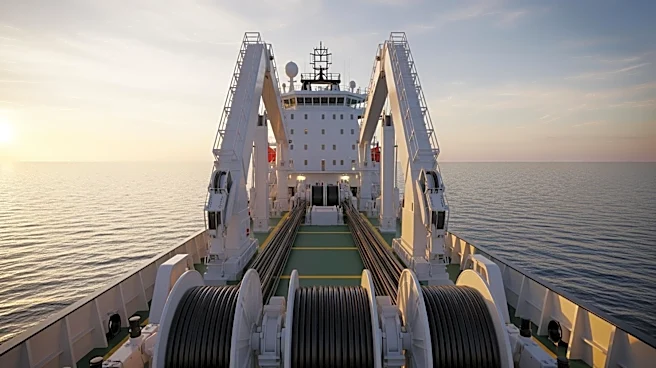
Belgian marine contractor Jan De Nul has launched its second next-generation cable laying vessel, the William Thomson, to support the growing demand for offshore wind and grid interconnection projects. This vessel, along with its sister ship Fleeming
Jenkin, represents the largest of their kind, designed to operate in water depths of up to 4,000 meters and equipped to handle cable tensions of up to 150 tonnes. Both vessels were launched at the CMHI Haimen shipyard in China and are set to become operational in the coming years. They feature hybrid power systems and emission-reduction technology to meet strict European standards. The vessels will be deployed for the 2GW offshore grid program in the Netherlands and Germany, and future projects like Belgium's Princess Elisabeth Island energy hub.
Why It's Important?
The launch of these advanced cable laying vessels is significant for the offshore renewable energy sector, particularly in Europe, where there is a strong push towards sustainable energy solutions. By enhancing its fleet with these high-capacity vessels, Jan De Nul is positioning itself as a key player in the installation of subsea cables, which are crucial for connecting offshore wind farms to the grid. This development supports the broader transition to renewable energy, reducing reliance on fossil fuels and contributing to the EU's climate goals. The vessels' ability to lay longer cables in a single campaign increases efficiency and reduces operational costs, benefiting the renewable energy industry and potentially lowering energy prices for consumers.
What's Next?
The William Thomson is expected to become operational in the first half of 2027, following the Fleeming Jenkin's delivery in late 2026. These vessels will initially be deployed for the 2GW offshore grid program, which involves installing over 2,800 kilometers of subsea cables. As demand for offshore renewable infrastructure grows, Jan De Nul is likely to continue expanding its fleet and capabilities, potentially leading to further innovations in cable laying technology and techniques. The company's strategic investments in hybrid power systems and emission-reduction technologies also set a precedent for future developments in the maritime industry.