

What's Happening?
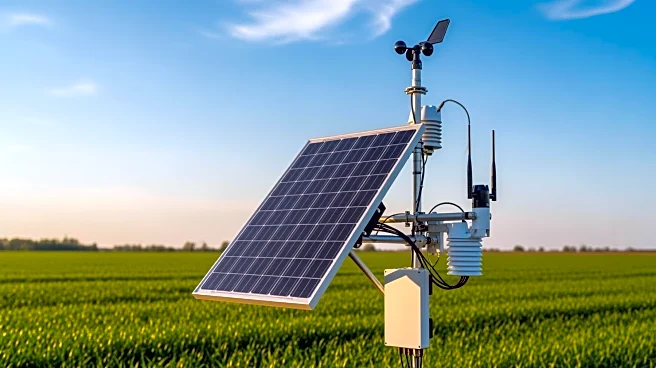
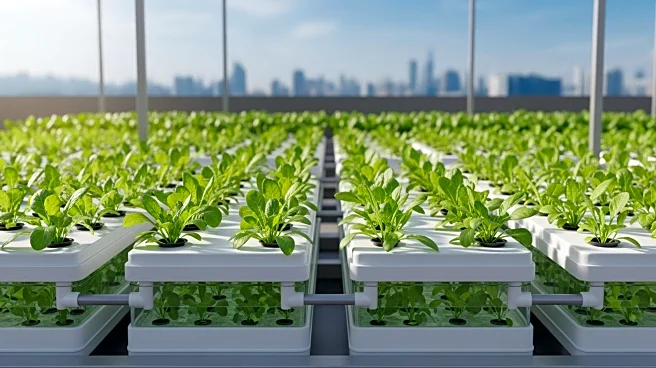
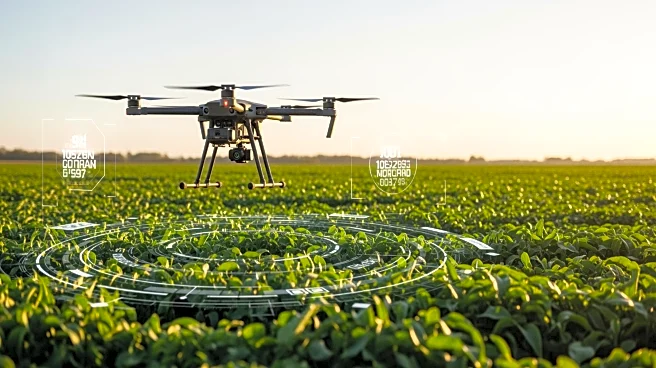
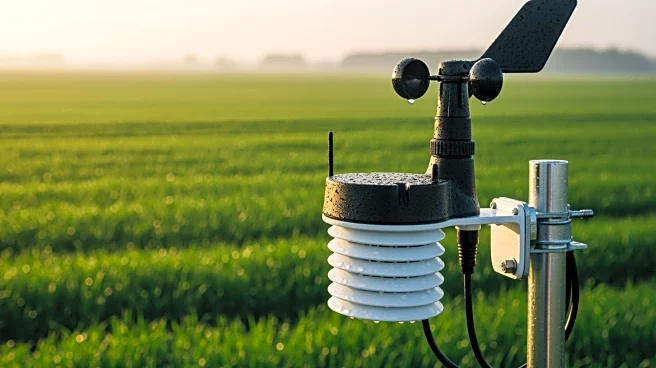
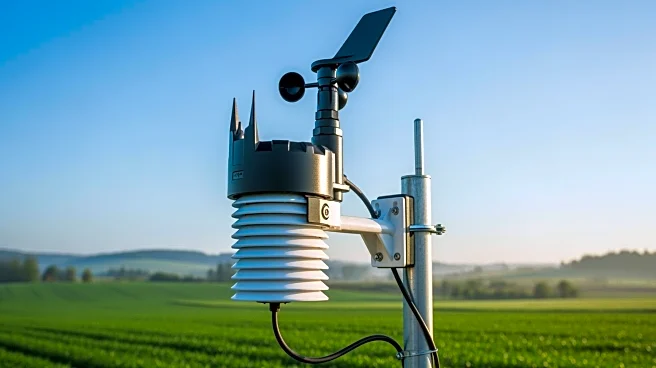
The digital agriculture market is projected to grow significantly, reaching USD 16.55 billion by 2035, with a compound annual growth rate of 5.14%. This growth is driven by the increasing need to enhance agricultural productivity and ensure food security as arable land decreases and the global population rises. Farmers are adopting technologies such as IoT-enabled monitoring systems and AI-driven analytics to maximize yield and reduce resource consumption. The integration of blockchain technology for supply chain transparency and the rise of vertical farming and smart greenhouses are notable trends in the sector. However, challenges such as high initial investment costs, data security concerns, and inconsistent internet connectivity in rural
areas remain.
Why It's Important?
The expansion of the digital agriculture market is crucial for addressing global food security challenges. As traditional farming faces limitations due to decreasing arable land and increasing population, digital agriculture offers solutions to optimize resource use and improve crop yields. This technological shift not only supports sustainable farming practices but also enhances food safety and market trust through improved supply chain transparency. The adoption of digital tools can lead to significant operational cost reductions for farmers, making agriculture more efficient and sustainable. However, overcoming barriers such as high costs and data security issues is essential for widespread adoption, particularly among small-scale farmers.
What's Next?
Future developments in the digital agriculture market will likely focus on overcoming current challenges, such as improving internet connectivity in rural areas and addressing data security concerns. Governments and private organizations are expected to continue investing in agri-tech infrastructure and farmer training programs to facilitate the adoption of digital tools. The market may also see increased collaboration between tech companies and agricultural enterprises to develop more affordable and user-friendly solutions. As the market grows, regulatory frameworks may evolve to address data privacy and interoperability issues, ensuring that digital agriculture can be effectively integrated into existing farming practices.