




What's Happening?
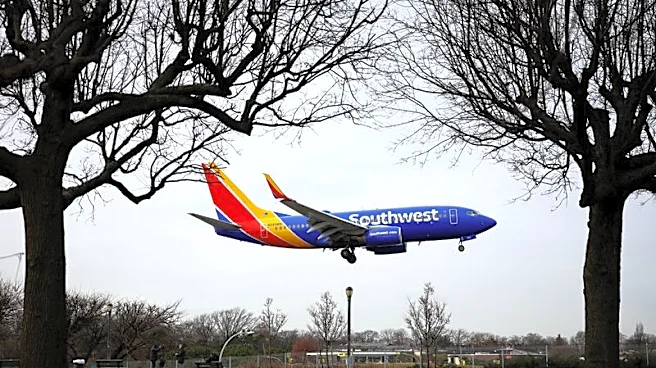
Southwest Airlines is reevaluating its fleet composition as it awaits the delivery of its first Boeing 737-7 aircraft. The airline, which is the launch customer for the 737-7, is considering adjustments to the number of these aircraft in its fleet due
to changing market conditions. The Federal Aviation Administration (FAA) is expected to certify the 737-7 by the end of the year, with Southwest planning to introduce the aircraft into service in early 2027. The airline's Chief Operating Officer, Andrew Watterson, noted that while the mission profile for the 737-7 remains unchanged, the mix of aircraft sizes may shift due to evolving business travel patterns and route demands.
Why It's Important?
Southwest's reassessment of its fleet strategy reflects broader trends in the aviation industry, where airlines are adapting to post-pandemic travel patterns. The shift towards larger aircraft like the 737-8, as opposed to the smaller 737-7, indicates a preference for accommodating longer routes with fewer frequencies. This strategic adjustment could impact Southwest's operational efficiency and market competitiveness. Additionally, the airline's exploration of long-haul services and premium offerings suggests a potential expansion of its business model to capture new customer segments and revenue streams.
What's Next?
Southwest is expected to continue evaluating its fleet composition and service offerings to align with customer preferences and market demands. The airline's consideration of long-haul flights and premium services indicates a strategic pivot that could redefine its market positioning. As the aviation industry recovers, Southwest's decisions on fleet and service expansion will be closely watched by industry stakeholders and could influence competitive dynamics in the U.S. airline market.