
What's Happening?
Recent advancements in electrochemical methods have significantly improved the extraction of uranium from seawater and mining wastewater. With global energy demands rising and terrestrial uranium reserves
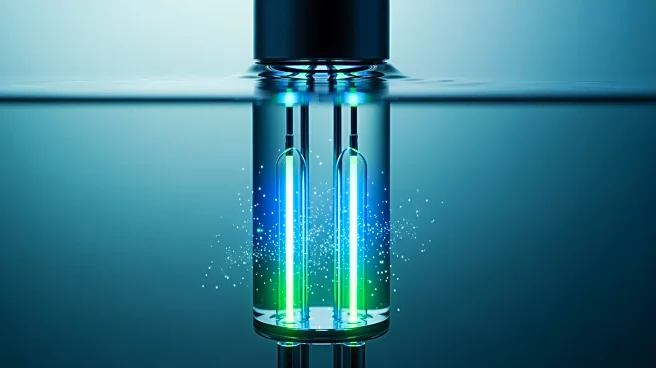
limited, these innovations are crucial for securing long-term nuclear fuel supplies. The review highlights the use of electrocatalysis, where uranyl ions are adsorbed and reduced into insoluble forms, as a promising technique. Studies have shown that electrode surface properties can enhance uranyl uptake, with MXene-based electrodes achieving a 98.4% extraction efficiency. These methods are particularly important in treating complex effluents from mining operations, offering a scalable solution for uranium recovery.
Why It's Important?
The development of efficient uranium extraction methods is vital for the sustainability of nuclear energy, a key component in reducing carbon emissions. By tapping into the vast uranium reserves in seawater and wastewater, these technologies could provide a more reliable and environmentally friendly source of nuclear fuel. This not only supports the growing demand for clean energy but also addresses the environmental challenges associated with uranium mining. The ability to recover uranium from water sources could reduce the ecological impact of mining and contribute to a more sustainable energy future.
What's Next?
While electrochemical methods show promise, scaling up these technologies presents challenges, particularly in terms of energy consumption and cost. Future research will focus on developing low-cost, high-performance electrode materials and reducing the energy requirements of these systems. Integrating these technologies into broader, multidisciplinary approaches will be essential for their successful implementation. As the field progresses, collaboration between researchers, industry, and policymakers will be crucial to overcoming these hurdles and realizing the full potential of electrochemical uranium extraction.