
What's Happening?
The ProShares Ultra Semiconductors ETF (NYSEARCA:USD), which aims to deliver twice the daily return of the Dow Jones U.S. Semiconductors Index, experienced a significant drop of approximately 17% on June
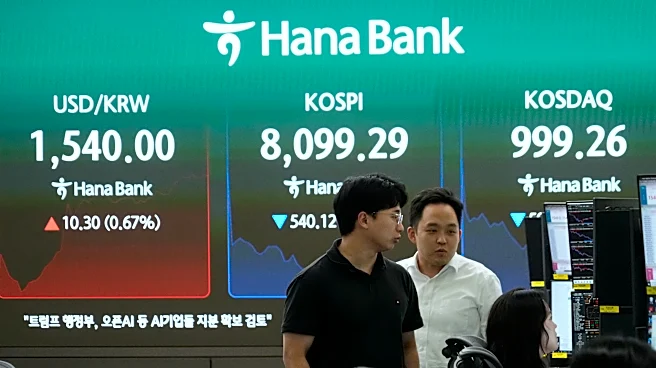
5, 2026. This decline followed a broader market downturn, with the unleveraged iShares Semiconductor ETF (NASDAQ:SOXX) also falling about 10% on the same day. The leveraged ETF's performance was slightly worse than expected due to the mechanics of daily resetting leverage, which can amplify losses during sharp market declines. The drop was triggered by Broadcom's fiscal Q2 report, which, despite showing strong revenue growth, provided guidance that fell short of market expectations. Additionally, a stronger-than-expected May payrolls report reignited concerns about potential interest rate hikes, further impacting semiconductor stocks.
Why It's Important?
The significant drop in the ProShares Ultra Semiconductors ETF highlights the risks associated with leveraged ETFs, particularly in volatile markets. The semiconductor sector, often seen as a barometer for technology and economic growth, faced a substantial selloff, shedding approximately $1.2 trillion in market capitalization in a single session. This event underscores the sensitivity of semiconductor stocks to changes in market expectations, especially regarding AI and technology investments. Investors in leveraged ETFs must be aware of the potential for amplified losses during market downturns, as these products are designed to magnify daily index movements. The broader implications for the technology sector and investor sentiment could influence future market dynamics and investment strategies.
What's Next?
Investors will be closely monitoring upcoming earnings reports and economic indicators to gauge the future direction of the semiconductor sector. Key events include Micron Technology's fiscal Q3 earnings report and TSMC's monthly revenue release, which will provide insights into the demand for semiconductor products and the health of the AI infrastructure market. Additionally, commentary from major technology companies on their capital expenditure plans will be crucial in assessing the long-term growth prospects for the semiconductor industry. These developments will help determine whether the recent selloff represents a temporary setback or a more significant shift in market sentiment.
Beyond the Headlines
The recent market volatility raises questions about the sustainability of the current growth trajectory in the semiconductor industry, particularly in the context of AI and technology investments. The potential for interest rate hikes and changes in corporate spending priorities could impact the sector's future performance. Moreover, the reliance on a few key players for AI semiconductor revenue highlights the risks of vendor concentration and the need for diversification. Investors and industry stakeholders must consider these factors when evaluating the long-term outlook for the semiconductor market.