





What's Happening?
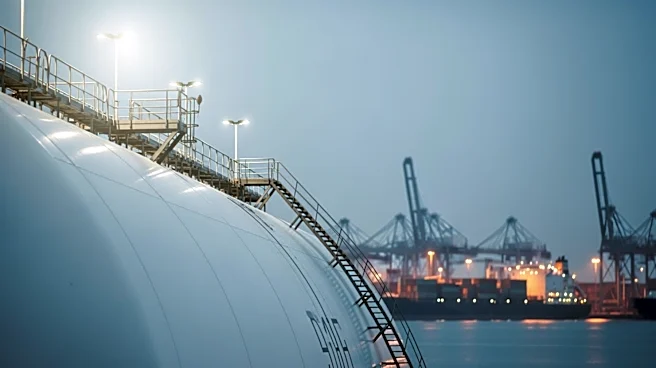
The United States has emerged as the world's largest exporter of liquefied natural gas (LNG), driven by technological advances and global demand. The transformation from a marginal LNG participant to a leading exporter has been marked by policy shifts
and market dynamics. The Trump administration has aggressively fast-tracked LNG approvals, with the Federal Energy Regulatory Commission (FERC) revising procedures to expedite projects in Texas, Louisiana, and offshore federal waters. The U.S. LNG market is characterized by flexible, destination-agnostic contracts indexed to Henry Hub prices, which proved advantageous during geopolitical events like Russia's invasion of Ukraine. Despite the growth, U.S. LNG exports face challenges from domestic approval processes and political resistance.
Why It's Important?
The rise of U.S. LNG exports has significant implications for the global energy market and U.S. economic interests. As the largest LNG exporter, the U.S. plays a crucial role in global energy security, particularly in Europe and Asia. The flexibility of U.S. LNG contracts offers a competitive edge, allowing for rapid response to geopolitical shifts. However, the expansion of LNG exports is constrained by domestic policy and regulatory hurdles, highlighting the tension between market opportunities and political considerations. The continued growth of U.S. LNG exports is vital for supporting GDP growth, employment, and allied energy security.
Beyond the Headlines
The expansion of U.S. LNG exports raises environmental and social concerns, particularly in Gulf Coast states where most export capacity is concentrated. Issues such as cumulative emissions, coastal erosion, and environmental justice impacts in minority communities have fueled litigation and opposition. Additionally, the absence of West Coast export terminals limits strategic access to Asian markets, underscoring the need for balanced policy decisions that address both market opportunities and environmental considerations.