
What's Happening?
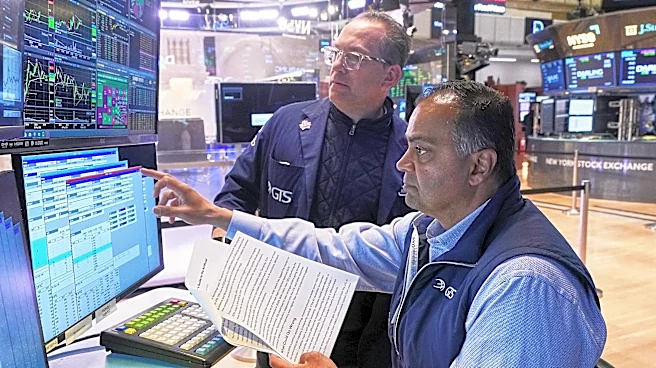
The U.S. stock market experienced a downturn on Tuesday, with the Nasdaq Composite leading the losses by falling approximately 0.8%. The S&P 500 and Dow Jones Industrial Average also saw declines of 0.5%
and 0.4%, respectively. This market reaction comes as investors digest the latest Consumer Price Index (CPI) data, which indicated a higher-than-expected increase in consumer inflation, driven in part by the ongoing blockade of the Strait of Hormuz affecting global fuel and energy costs. Additionally, tensions between the U.S. and Iran have escalated, with President Trump labeling Iran's response to U.S. proposals as 'garbage,' putting a ceasefire agreement on 'life support.' These geopolitical tensions have contributed to a rise in oil prices, with West Texas Intermediate crude surpassing $101 per barrel.
Why It's Important?
The current market volatility highlights the interconnectedness of geopolitical events and economic indicators. Rising inflation, as evidenced by the CPI data, could influence the Federal Reserve's monetary policy decisions, potentially affecting interest rates and economic growth. The tensions in the Gulf region, particularly the blockade of the Strait of Hormuz, are exacerbating energy costs, which could lead to higher consumer prices and impact various sectors reliant on fuel. Investors are closely monitoring these developments, as they could have significant implications for global trade and economic stability. The situation underscores the importance of diplomatic resolutions to geopolitical conflicts to maintain market stability.
What's Next?
As President Trump prepares for a trip to China to meet with President Xi Jinping, trade and artificial intelligence are expected to be key topics of discussion. The outcome of these talks could influence future trade policies and economic relations between the two countries. Meanwhile, the ongoing legal and diplomatic efforts to address the U.S.-Iran tensions will be critical in determining the future of the ceasefire agreement and its impact on global oil markets. Investors and policymakers will be watching closely for any signs of resolution or further escalation.